💡 Key Takeaways
- Developers must finalize JSON schemas and secure API authentication by March 31, 2026.
- Real-time AIS syncing and automated advance tax calculations require robust endpoint management.
- Strict TLS 1.3 encryption and programmatic DSC signing are legally mandated for all submissions.
- Early sandbox testing prevents catastrophic server rejections during the July peak tax season.
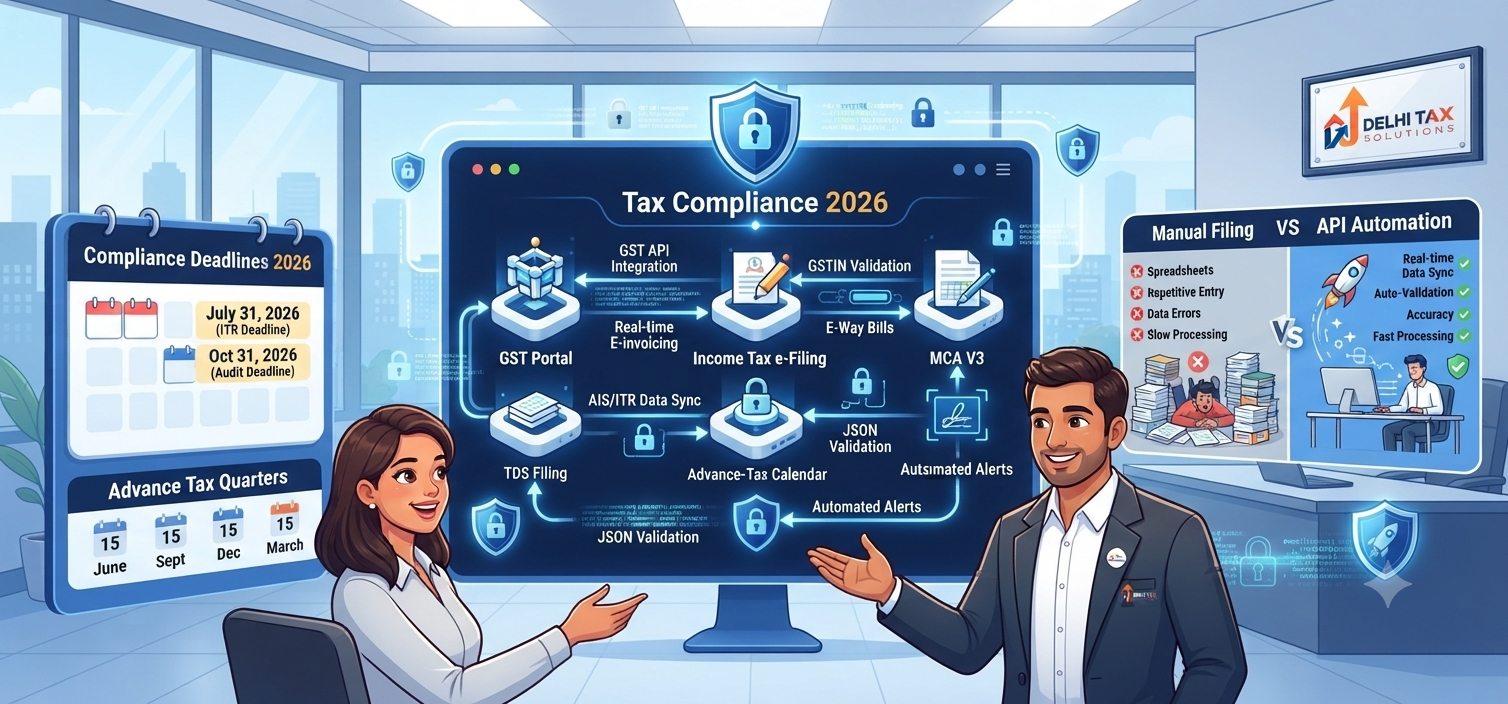
The digital landscape for tax compliance is evolving rapidly. Software developers face strict deadlines to align their platforms with government mandates. Timelines & integration for 2026 dictate exactly when financial applications connect to the central tax grid. Missing technical milestones results in filing failures, frustrated clients, and statutory penalties. Automated ITR filing timelines 2026 leave no room for delayed deployments. This developer guide breaks down the precise technical requirements for the upcoming assessment year. Software engineering teams will learn how to handle JSON payload updates, manage cryptographic authentication, and deploy robust error-handling pipelines.
What are the timelines & integration for 2026?
Timelines & integration for 2026 represent the critical technical rollout schedule established by the Central Board of Direct Taxes (CBDT). By March 31, 2026, software developers must finalize their connections to the government e-filing portal. This upgrade ensures enterprise systems automatically fetch taxpayer data, validate JSON payloads locally, and submit income tax returns seamlessly. For businesses expanding their technological operations, our guide on Company Registration – Delhi Tax Solution provides complete corporate setup support.
How does the Income Tax Department upgrade its systems for 2026?
Stringent Validation Checkpoints
The digital tax infrastructure roadmap introduces rigorous validation checkpoints to eliminate fraudulent claims and formatting inconsistencies across all submitted files.
Real-Time Data Pipelines
According to official guidelines from the Income Tax Department, developers must upgrade their data pipelines immediately to handle heavier data loads with absolute precision and speed.
Enhanced Compliance Protocols
Modernizing internal architectures aligns enterprise workflows with protocols detailed in our Income Tax – Delhi Tax Solution guide.
What are the core technical and security milestones?
API Authentication and Token Handshakes
Establishing secure programmatic connections requires multi-factor authentication, OAuth tokens, and registered digital certificates to verify software vendor identities.
Local Schema Validation Standards
Developers must pre-validate outgoing JSON payloads against annual schemas released by tax authorities to prevent server-side rejections during peak filing windows.
Asynchronous Queuing and Rate Limiting
Building resilient worker queues and exponential backoff algorithms protects API endpoints from timing out during high-volume submission rushes.
Comparison of Legacy Filing versus 2026 API Integration Frameworks
| Evaluation Metric | Legacy Web Portal Filing | 2026 API Integration Framework |
|---|---|---|
| Data Transmission | Manual CSV uploads and web form entry | Automated real-time JSON payload sync |
| Error Detection | Discovered post-submission during manual checks | Instant pre-validation against official schemas |
| Scalability | Vulnerable to server crashes on peak days | Infinitely scalable via asynchronous queuing |
Strategic financial planning requires understanding how legislative updates impact long-term corporate growth, as detailed in our analysis of Income Tax Act 2025 vs 1961: Key Differences Explained. Furthermore, ensuring overall statutory alignment across departments is vital for seamless operations.
How do developers manage audits and compliance logs?
Automated Acknowledgment Tracking
Once data transmits successfully, automated systems poll the tax server to retrieve acknowledgment numbers and generate signed electronic verification slips instantly.
Reconciling Tax Ledger Discrepancies
Automated software continuously compares submitted payloads against Form 26AS and AIS data to flag mismatches before final processing by the central tax authority.
Audit Trail Maintenance and Compliance Logs
Maintaining immutable logs of all API requests and responses ensures full accountability during regulatory reviews monitored by the Ministry of Corporate Affairs.
Conclusion and Professional CA Guidance
Navigating the complex requirements of tax compliance timelines and integration for 2026 demands absolute technical precision, rigorous testing, and strategic foresight. Partnering with seasoned tax and technology professionals ensures that your enterprise secures lasting compliance while minimizing litigation risks. Talk to a Delhi Tax Solutions expert to review your tax automation architecture and streamline your API integration within 3 days. Strategic advisory remains the bedrock of secure digital growth.
Frequently Asked Questions (FAQs)
Q: What are the key tax compliance timelines and integration milestones for 2026?
A: Major milestones include finalizing API connections and JSON schema validations by March 31, 2026, adhering to real-time e-invoicing thresholds, and meeting statutory ITR filing due dates such as July 31, 2026, for non-audit cases. Early sandbox testing and robust endpoint management are critical to avoiding seasonal server rejections.
Q: How do software developers handle JSON schema validations for 2026 tax filings?
A: Developers must download official annual JSON schemas and validation utilities provided by the Income Tax Department. Automated testing pipelines validate outgoing taxpayer payloads against these strict rules before transmission, catching formatting errors and missing mandatory fields early.
Q: What authentication protocols are required for connecting to government e-filing portals?
A: The e-filing ecosystem requires multi-factor authentication, secure OAuth tokens, registered digital certificates, and authorized intermediary credentials. Every API request must carry valid cryptographic signatures and session identifiers issued during handshake procedures.
Q: Why is real-time AIS syncing and automated advance tax calculation important?
A: Real-time AIS syncing ensures that pre-filled income tax return forms match government financial records perfectly, preventing discrepancy notices. Automated advance tax calculations help profitable enterprises clear quarterly installments accurately, avoiding severe interest penalties under the Income Tax Act.
Q: How can expert tax consultancy help businesses transition to 2026 compliance standards?
A: Experienced Chartered Accountants conduct comprehensive technical and financial audits of existing billing software, train internal accounting teams on API workflows, and ensure seamless synchronization across GST, Income Tax, and MCA portals without disrupting daily business operations.
Disclaimer: This article is for general informational purposes and is not a substitute for personalised professional tax advice. About this article: Researched using official government sources and Delhi Tax Solutions’ in-house tax advisory team. Last updated September 2026.