
? Key Takeaways
- India officially shifts to a single unified “Tax Year” starting April 1, 2026.
- The confusing dual labels of Previous Year and Assessment Year vanish entirely.
- Income earned and taxes filed for a financial period now share identical naming.
- This modernisation aligns Indian financial compliance with strict global standards.
- Taxpayers face a maximum ?5,000 penalty for selecting the wrong reporting year.
India’s financial system undergoes its most massive structural change in over six decades on April 1, 2026. The tax terminology you have used your entire adult life is about to vanish permanently. You must understand the specific difference between tax year vs assessment year to avoid devastating filing errors during this historic transition. This comprehensive guide explains exactly how the new direct tax rules consolidate complex timelines into one single reporting period.
Every single Indian taxpayer will discover why the previous year concept was legally removed and how these changes impact upcoming financial filings. No more date confusion. Unified reporting. Perfectly aligned timelines. Understanding this exact terminology shift prepares you to manage your compliance confidently without triggering automated penalty notices.
We outline the critical legal changes, the specific framework updates, and the immediate operational steps your business must execute today.
Tax Year vs Assessment Year: What Is the Difference?
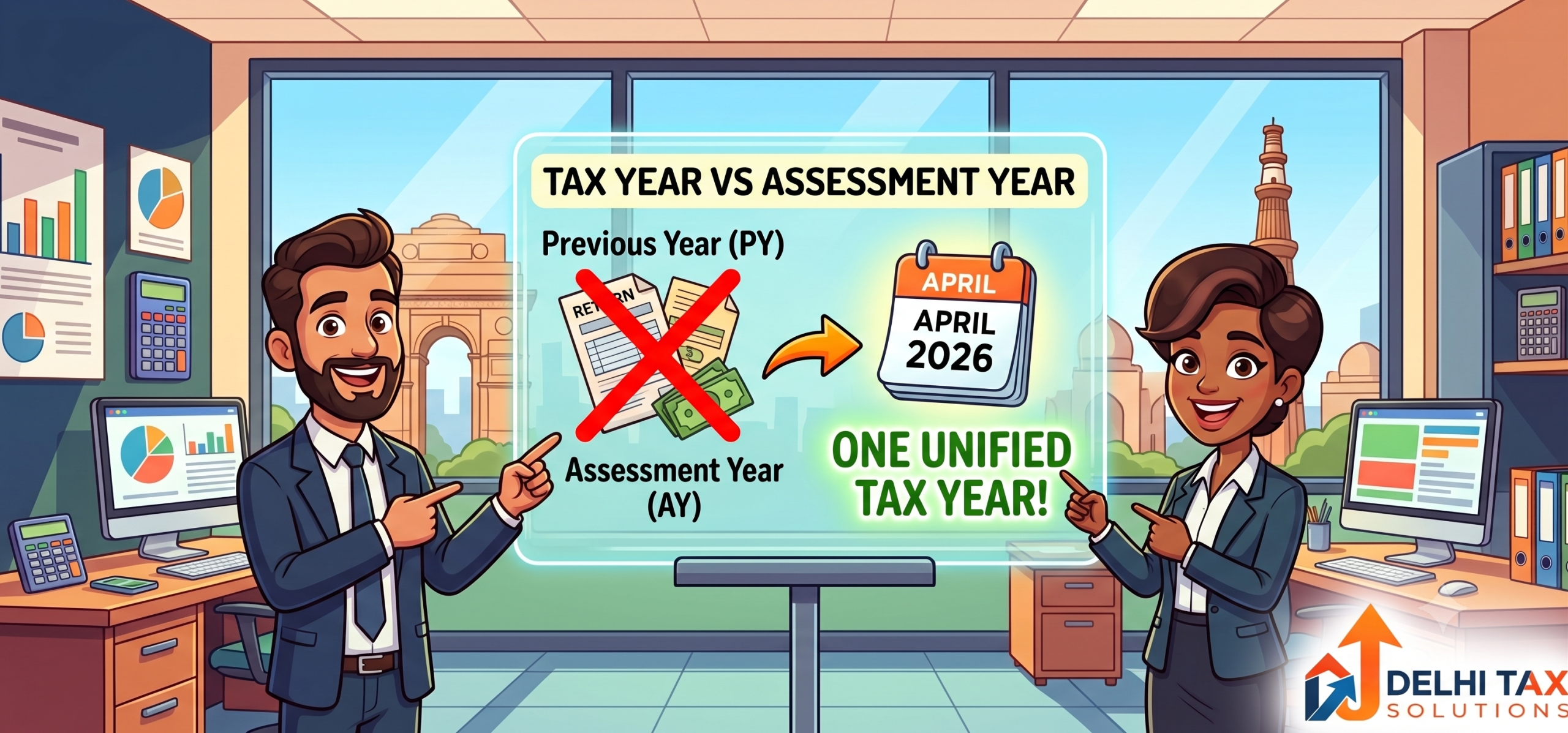
What is the exact difference between tax year vs assessment year in India? Under the older tax framework, the ‘Previous Year’ was the 12-month period you earned income, while the ‘Assessment Year’ was the subsequent 12-month window when you filed returns. Starting April 1, 2026, the new legislation permanently replaces both confusing terms with a single, unified ‘Tax Year.’ This means the year you earn income and the year you file share the exact same label.
This fundamental terminology shift affects every individual, freelancer, and registered business across the country. By merging two distinct timelines into a single block, the government actively removes the primary cause of automated filing errors.
Direct Comparison of the Two Frameworks
To fully grasp the magnitude of this transition, examine how a standard financial cycle changes. The comparison table below illustrates how a single 12-month period was historically labeled compared to the new simplified system.
| Feature | Old Rules (1961 Act) | New Rules (2025 Act) |
|---|---|---|
| Earning Period Name | Previous Year (PY) | Tax Year |
| Filing Period Name | Assessment Year (AY) | Tax Year |
| Example (Income earned in 2026) | PY 2026-27 / AY 2027-28 | Tax Year 2026-27 |
| Complexity Level | High (Two distinct labels) | Low (One unified label) |
| Global Alignment | Outdated | Modernised |
Every taxpayer must adjust their internal accounting software to reflect this updated reality. Filing an Income Tax Return (ITR) under the incorrect label triggers immediate defect notices from the Central Processing Centre.
Why Was the Assessment Year Replaced?
The government prioritised massive structural reforms to create a taxpayer-friendly compliance environment. For decades, the dual-year terminology frustrated ordinary citizens. Many honest taxpayers inadvertently selected the wrong drop-down menu on the e-filing portal, leading to unnecessary litigation, frozen accounts, and delayed refunds.
According to updates published by the Press Information Bureau, the new legislation standardises the reporting period to eliminate the ?5,000 late filing penalty triggered by incorrect year selection. The assessment year replaced framework guarantees that the period you earn money matches the exact period printed on your tax challans. This drastically lowers the administrative burden for both taxpayers and government auditors.
Aligning With Global Standards
India’s previous reliance on the British-era Assessment Year model stood in stark contrast to modern international norms. The shift to a simplified tax terminology aligns the country with transparent digital accounting practices used globally. This strategic alignment encourages foreign direct investment by making Indian tax compliance logical and predictable for international corporate directors.
? In a Nutshell
The unified Tax Year eliminates archaic labels, reduces data entry errors, and ensures your tax challans finally make logical sense. You earn in 2026, you file for 2026.
How the Previous Year Concept Removed Confusion
Filing taxes always required mental gymnastics to match earnings with the correct statutory timeline. With the previous year concept removed, taxpayers no longer need to calculate future dates to process current financial obligations. This immediate clarity directly impacts how businesses manage their quarterly liquidity and statutory advance payments.
Solving the Dual-Timeline Dilemma
When you generate a tax challan today, you must carefully calculate the future assessment timeline. Small business owners frequently deposit their hard-earned money under the wrong year. The Income Tax Filing process now demands that taxpayers select only one cohesive 12-month period on the government portal. This eliminates the widespread phenomenon of mismatched tax credits entirely.
Impact on Advance Tax and TDS
The removal of the dual timeline immediately streamlines Tax Deducted at Source (TDS) compliance. When your clients deduct TDS from your invoices, they will report it under the exact same Tax Year that you declare the income. Managing your quarterly advance tax payment schedules becomes infinitely easier when your accounting ledgers and the government’s portal speak the exact same language.
Preparing for ITR Tax Year 2026-27 Compliance
The transition requires proactive operational upgrades for every registered business in India. The ITR tax year 2026-27 marks the first mandatory cycle under these consolidated rules. Your internal accounting teams must completely overhaul their invoicing software, payroll systems, and financial ledgers before April 1, 2026, to prevent severe operational bottlenecks.
Updating Corporate Accounting Systems
Business owners must mandate immediate training for their finance departments. The Income Tax Department explicitly states that taxpayers with a business turnover exceeding ?1 crore must file their audit reports under the new unified timelines. Failure to update your Enterprise Resource Planning (ERP) software guarantees a defective audit report, triggering strict scrutiny and potential legal notices.
Synchronising with GST and ROC Filings
Direct taxes do not exist in a vacuum. Your direct tax reporting must match your indirect tax filings perfectly. The GST Portal now demands exact revenue matching, meaning your monthly GSTR-3B filings under your Goods and Services Tax Identification Number (GSTIN) must perfectly align with the new 12-month consolidated reporting cycle.
Furthermore, as per the Ministry of Corporate Affairs, companies must submit their Registrar of Companies (ROC) annual returns within 60 days of their Annual General Meeting using the updated terminology. Any Indian founder executing a new Company Registration today must set up their initial financial calendar to natively support this modernised compliance structure.
Key Transitional Provisions Under Section 11
Moving a nation of 1.4 billion people to a new financial vocabulary requires specific legal bridges. The tax year definition section 11 of the newly enacted direct tax code provides these exact statutory bridges. It legally dictates how the government interprets historical financial documents, past assessments, and ongoing tax litigation that overlaps the transition date.
Handling Brought Forward Losses
Corporate directors frequently ask what happens to their accumulated business losses during this transition. Section 11 explicitly protects taxpayers’ financial rights. Any unabsorbed depreciation or business losses successfully claimed under the old Assessment Year framework seamlessly transfer over to the new unified timeline. You do not lose your legally accrued financial benefits simply because the terminology changed.
Notices and Historical Assessments
The legal transition explicitly safeguards historical compliance. If a taxpayer receives a reassessment notice regarding an older financial period, the tax department will issue that notice using the old 1961 terminology. The new rules under the Direct Tax Code Updates apply strictly and exclusively to income earned on or after April 1, 2026.
Based on cases handled by our CA team, businesses that conduct a thorough internal compliance audit six months prior to this legal transition experience zero friction. What experts say is clear: early adoption of the unified terminology within your internal communications prevents costly data entry disasters next filing season.
Conclusion
Understanding the difference between tax year vs assessment year protects your financial reputation and ensures seamless compliance. India’s shift to a single, unified reporting timeline permanently eliminates the confusing dual-year framework that plagued taxpayers for decades. By merging the earning period and the filing period into one identical label, the government has drastically simplified how you manage your annual statutory obligations.
Adapting to this modernised terminology early prevents severe administrative headaches and costly late filing penalties. You must update your accounting software, train your finance team, and align your corporate reporting schedules before the April 2026 effective date. Do not wait for portal glitches to delay your filings. Talk to a Delhi Tax Solutions expert today to get your GST Registration and corporate compliance updated seamlessly.
About this article: Researched using official government sources and Delhi Tax Solutions’ in-house tax advisory team. Last updated August 2026.
Disclaimer: This article is for general informational purposes and is not a substitute for personalised professional tax advice.
Frequently Asked Questions (FAQs)
+ What is the exact difference between tax year and assessment year?
Under the old Income Tax Act of 1961, the “Previous Year” was the specific 12-month period in which you actually earned your income. The “Assessment Year” was the subsequent 12-month period when you officially filed your returns and the government assessed that income. Starting April 1, 2026, the new legislation permanently merges these two concepts into one single, unified term called the “Tax Year,” meaning both earning and filing share the exact same year label.
+ Has the assessment year concept been permanently replaced in India?
Yes, the archaic assessment year concept has been permanently replaced in India. The government enacted the new direct tax laws to modernize compliance and reduce widespread filing errors. By eliminating the confusing dual-timeline system, the Income Tax Department ensures that taxpayers no longer have to manually calculate future assessment dates when depositing their advance tax payments or filing their annual statutory returns.
+ How will I file my ITR for Tax Year 2026-27?
You will file your Income Tax Return for Tax Year 2026-27 exactly as you did in previous years, but with significantly less date confusion. When logging into the digital e-filing portal to report income earned between April 1, 2026, and March 31, 2027, you will simply select “Tax Year 2026-27” from the drop-down menu. The portal’s updated architecture automatically maps your Annual Information Statement (AIS) to this single unified period without requiring manual date conversions.
+ What happens to my brought-forward business losses under the new rules?
Your existing financial benefits remain entirely secure. Under the specific transitional provisions of the new tax laws, any legally verified brought-forward business losses, unabsorbed depreciation, or accumulated tax credits from older assessment years will seamlessly carry forward into the new framework. Taxpayers do not lose any previously established financial protections simply because the government formally updated its statutory vocabulary.
+ Do the new tax year definitions change the basic income tax slab rates?
No, altering the terminology from Assessment Year to Tax Year does not inherently change your basic income tax slab rates or standard deductions. This specific update is a structural simplification designed strictly to ease administrative burdens and reduce portal filing errors. Your actual financial tax liability remains governed by the specific slab rates and deduction limits announced in the applicable Union Budget for that respective financial year.
