
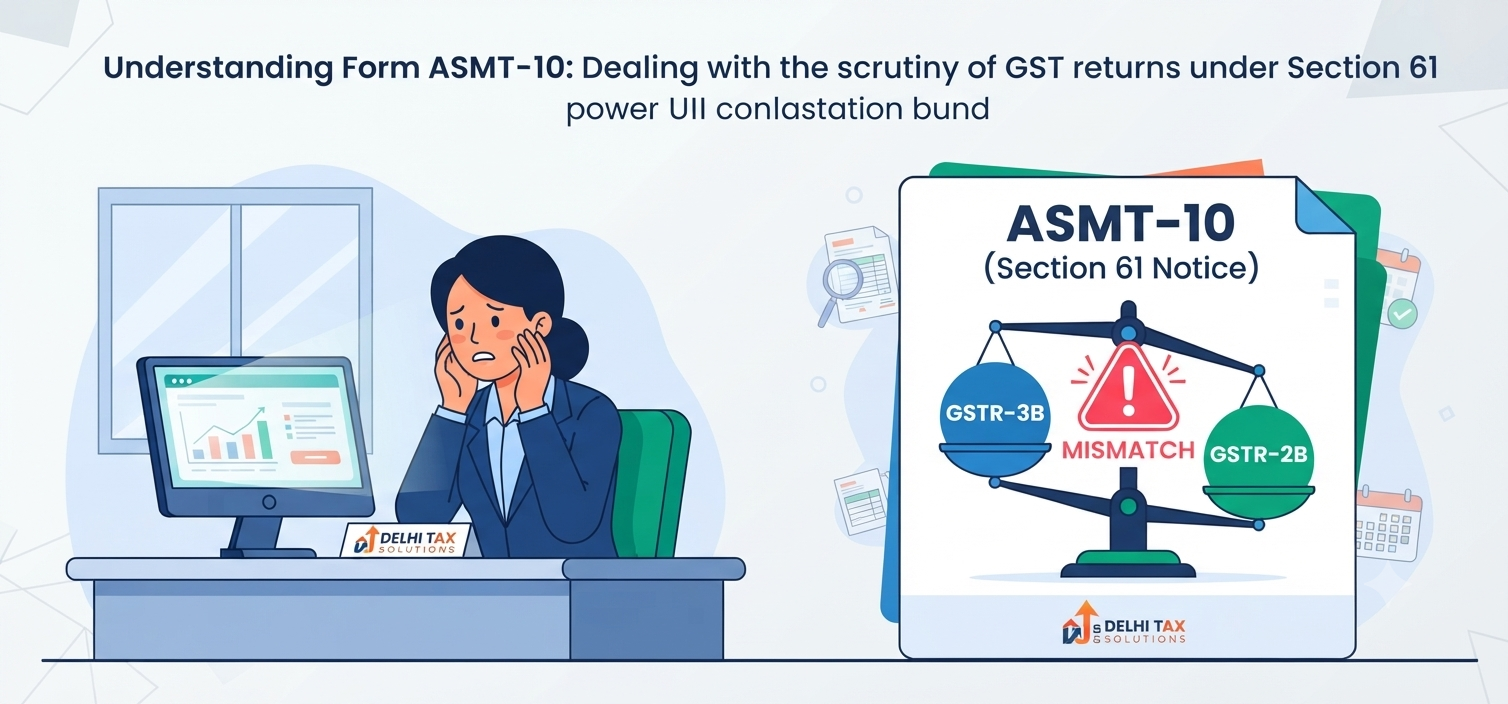
💡 Key Takeaways: GST Notice Under Section 61 (ASMT-10)
- What is it? Scrutiny of returns is a process under Section 61 where the GST department verifies the correctness of your filed returns (GSTR-1, GSTR-3B, etc.).
- Form ASMT-10: If discrepancies are found (like tax mismatches or excess ITC claimed), a formal notice is issued in Form GST ASMT-10.
- Time to Reply: You generally have 30 days to respond to an ASMT-10 notice or pay the demanded tax.
- How to Respond: Taxpayers must file their explanation or acceptance of the discrepancy using Form GST ASMT-11.
With the implementation of automated data analytics by the GST department, the scrutiny of returns under GST has become incredibly stringent. If the GST portal detects that your outward supplies don’t match your tax payments, or your Input Tax Credit (ITC) claim exceeds what is allowable, you will likely receive a Section 61 notice.
This communication is officially known as Form GST ASMT-10. Receiving this notice can cause panic among business owners, but it is simply the first step in the scrutiny process. Let’s understand why a section 61 notice is issued, what triggers this scrutiny of returns, and how to effectively file your reply.
What is the Scrutiny of Returns (Section 61)?
Under Section 61 of the CGST Act, 2017, the Proper Officer can scrutinize the returns filed by a registered person to verify their correctness. It is important to note that this is not a full-fledged audit; rather, it is an automated or manual cross-verification of the data you have provided across different GST forms.
If the officer finds any discrepancies during this scrutiny of GST returns online, they will issue a notice seeking an explanation.
Common Triggers for an ASMT-10 Notice
The GST portal continuously cross-references your filings. A section 61 notice is most commonly triggered by the following mismatches:
- GSTR-1 and 3B Mismatch: The tax liability declared in your GSTR-1 (Outward Supplies) is higher than the tax actually paid via GSTR-3B.
- GSTR-3B vs GSTR-2A/2B ITC Mismatch: You have claimed more Input Tax Credit (ITC) in your GSTR-3B than what is reflected in your auto-populated GSTR-2A or GSTR-2B.
- E-Way Bill Discrepancies: The value of supplies declared in generated e-way bills does not match the sales reported in GSTR-1 or GSTR-3B.
- TDS/TCS Mismatches: Variations between the TDS/TCS credit claimed in GSTR-3B and the amount reflected in the portal (from GSTR-7 and GSTR-8 filers).
⚠️ Ignoring ASMT-10 is Dangerous
Never ignore a section 61 notice. If you fail to reply to an ASMT-10 within 30 days, or if the officer finds your explanation unsatisfactory, they can initiate serious actions including an audit under Section 65, a special audit under Section 66, or issue a show-cause notice under Section 73 or 74 for tax recovery and penalties.
How to Reply to a GST Notice Under Section 61
When you receive an ASMT-10, you have two choices: accept the discrepancy and pay the tax, or provide a valid explanation contesting the discrepancy. Both actions require filing Form GST ASMT-11.
Scenario 1: You Agree with the Discrepancy
If you realize a genuine error was made (e.g., you underpaid tax or over-claimed ITC), you should pay the pending tax amount along with applicable interest using Form DRC-03. After payment, inform the Proper Officer by filing your ASMT-11 reply format online, linking the DRC-03 ARN.
Scenario 2: You Disagree with the Discrepancy
If the mismatch is due to clerical errors, timing differences (e.g., invoice raised in March, ITC claimed in April), or supplier delays that are legally justifiable, you must draft a detailed, point-by-point explanation. Upload this explanation along with supporting documents (invoices, ledgers, reconciliations) while filing ASMT-11 on the GST portal.
The Final Step: ASMT-12
Once you submit your ASMT-11 reply, the Proper Officer will review it. If they are satisfied with your explanation or the payment you made via DRC-03, they will drop the scrutiny proceedings and issue an order of acceptance in Form GST ASMT-12. This officially closes the section 61 notice.
Received an ASMT-10 Notice? Don’t Risk Penalties!
Handling the scrutiny of returns and drafting an effective ASMT-11 reply requires deep knowledge of GST reconciliations and case laws. A poorly drafted response can lead to hefty demands under Section 73/74.
Let the experts handle it. Contact Delhi Tax Solutions today. We specialize in resolving GSTR-1 vs 3B and ITC mismatches, ensuring your ASMT-10 is closed smoothly with an ASMT-12 order.
Frequently Asked Questions (FAQs)
+ Q: What is Form ASMT-10 in GST?
A: ASMT-10 is a notice issued under Section 61 of the CGST Act. It is issued by the tax authorities to inform a taxpayer about discrepancies found during the scrutiny of their filed GST returns.
+ Q: What is the time limit to reply to a section 61 notice?
A: You generally have 30 days from the date of receiving the ASMT-10 notice to file your response in Form ASMT-11 or to pay the demanded amount. An extension may be granted if requested properly.
+ Q: Which form is used to reply to ASMT-10?
A: Form GST ASMT-11 is used to submit your explanation or to inform the officer about the tax payment made regarding the discrepancies pointed out in ASMT-10.
+ Q: What happens if the GST officer is satisfied with my ASMT-11 reply?
A: If the officer is satisfied with your explanation, they will issue an order in Form GST ASMT-12, stating that the reply is satisfactory and the scrutiny proceedings under Section 61 are dropped.
About this article: Based on Section 61 of the CGST Act, 2017, and related scrutiny guidelines. Updated for 2026.
Disclaimer: This article is for informational and educational purposes only and should not be considered legal or financial advice. Always consult a tax professional before responding to official notices.