💡 Key Takeaways
- LTA exemption covers domestic travel expenses for salaried employees under Section 10(5).
- The current four-year block period runs from 2022 to 2025/2026 as per statutory rules.
- LTA exemption is available strictly under the Old Tax Regime, not the default new regime.
- Only travel ticket costs qualify; hotel stays, food, and local sightseeing are excluded.
- Employees must submit boarding passes, flight tickets, and travel bills to their employers.
Maximizing take-home salary requires careful navigation of employee allowances. Among various salary components, Leave Travel Allowance stands out as a powerful tax-saving tool for salaried individuals. Mastering LTA exemption rules ensures you claim every rupee of eligible travel reimbursement without triggering employer scrutiny.
Under Section 10(5) of the Income Tax Act, salaried employees can claim tax exemption on travel expenses incurred during domestic vacations with their families. However, navigating block years, mode-of-transport restrictions, and documentary proof requirements demands careful attention. A single missing boarding pass can invalidate an entire claim.
This comprehensive guide breaks down statutory block cycles, eligible expenses, and exact submission steps for FY 2025-26. Plan your journeys correctly to optimize your annual tax liability.
What are the core LTA exemption rules for salaried employees?
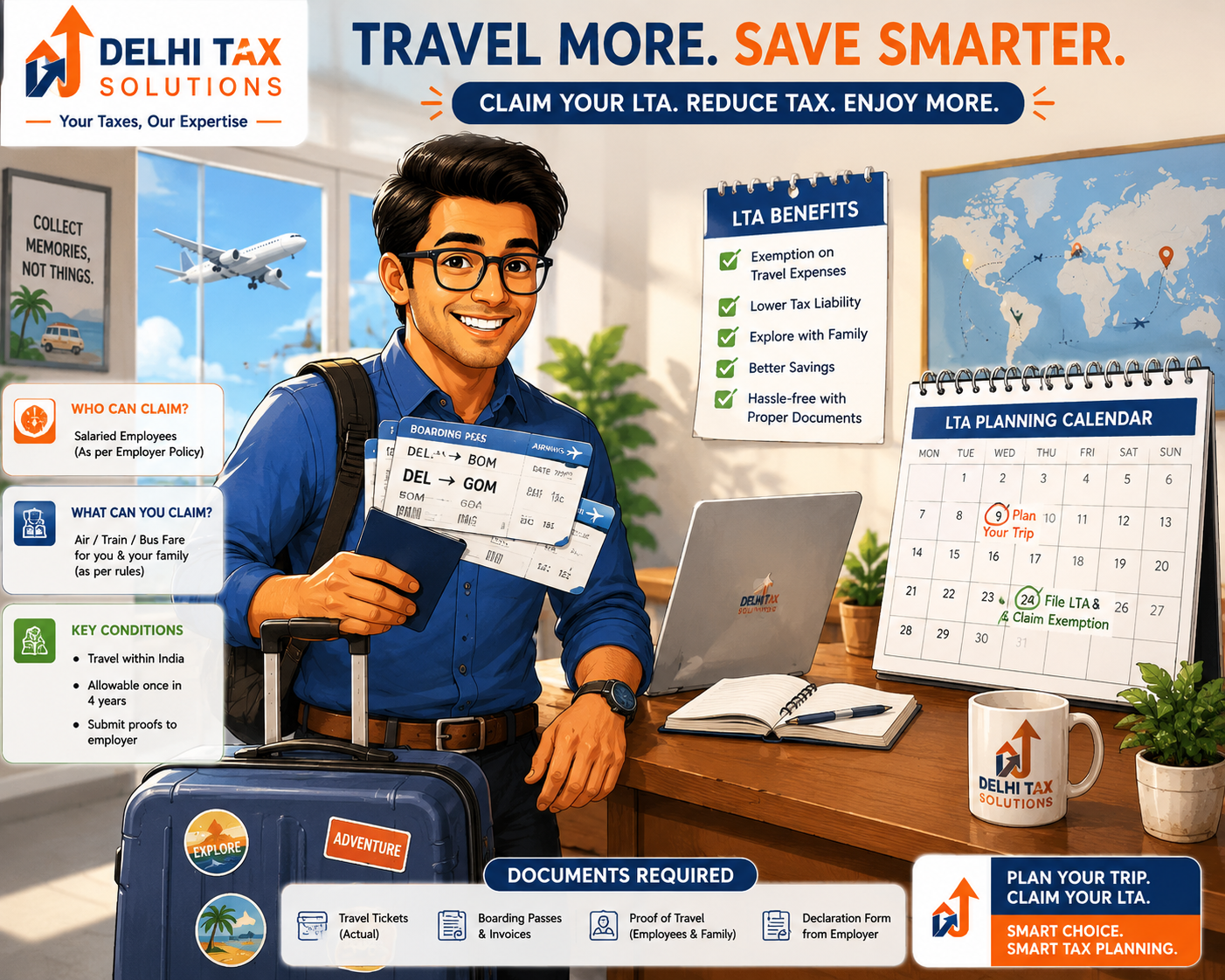
LTA exemption rules allow salaried employees to claim tax-free allowances for domestic travel undertaken within India under Section 10(5) of the Income Tax Act. The exemption covers actual travel expenses incurred by the employee and dependent family members for maximum two journeys within a designated four-year block. Only the cost of transportation—such as air, rail, or bus fares—qualifies for tax exemption. Accommodation, meals, and local transit costs are strictly excluded from the claim.
How do the LTA block year rules operate in India?
Tax regulations structure travel exemptions around fixed multi-year cycles. Understanding LTA block year rules is crucial because unclaimed exemptions from one block do not automatically lapse entirely; instead, one journey can be carried over to the first calendar year of the immediately succeeding block. The current designated four-year block runs from 2022 to 2025.
Employees can claim tax exemptions for a maximum of two journeys within this four-year window. If an employee fails to utilize both claims during the 2022–2025 block, they can claim an exemption for one journey undertaken within the first calendar year of the next block (2026). This carry-over journey operates independently of the two journeys permitted for the new block.
According to updates published by the Income Tax Department, employers must verify travel proofs before releasing tax-free allowances. Taxpayers managing multiple income sources or corporate perks should also review broader Income Tax filing guidelines to avoid computation errors.
Significance of family definition under Section 10(5)
Tax laws define “family” specifically for travel concessions. Eligible members include the employee’s spouse, children (limited to two children born on or after October 1, 1998, though multiple births on the second occasion count as one), and dependent parents, brothers, or sisters. Traveling with independent relatives or friends disqualifies that portion of the expense.
Is LTA exemption available under the new tax regime?
Analyzing LTA exemption rules requires checking your chosen tax framework. The LTA exemption new tax regime status is straightforward: LTA is completely unavailable if you opt for the default New Tax Regime under Section 115BAC. Salaried employees wishing to claim travel exemptions must consciously select the Old Tax Regime during their annual employer tax declaration.
While the new tax structure offers lower tax slab rates, it eliminates most common deductions and exemptions, including House Rent Allowance, Section 80C investments, and Leave Travel Allowance. Taxpayers must evaluate whether the tax savings from LTA outweigh the concessional slab rates of the new regime.
Corporate professionals transitioning between tax regimes or setting up business ventures via Company Registration should consult certified tax advisors to determine optimal personal tax planning strategies.
Mode of transport and statutory expense limits
The quantum of exemption depends strictly on the mode of transport utilized. If travel occurs via national carrier economy class airfare, the actual fare or air-conditioned first-class rail fare by the shortest route is exempt, whichever is lower. For non-air travel where rail service exists, AC first-class rail fare is the maximum limit. If no rail link exists, recognized public transport bus fares apply.
| Mode of Travel | Exemption Limit Applicable | Qualifying Proof Needed |
|---|---|---|
| Air Travel | Economy class airfare by shortest route | Flight ticket and boarding pass |
| Train Travel | AC First Class rail fare by shortest route | Train ticket or PNR status |
| Public Bus | First-class or deluxe bus fare | Official bus tickets and receipts |
| Car / Taxi | Equivalent AC rail fare by shortest route | Car rental bills and toll receipts |
⚡ Quick Summary
LTA is strictly restricted to domestic travel within India, covers only transportation costs, and is unavailable under the default New Tax Regime.
What LTA claim documents are mandatory for approval?
Submitting accurate LTA claim documents is essential for employer approval and audit safety. Employers act as primary deductors and must retain valid proof of travel to exempt the allowance from Tax Deducted at Source (TDS). Failing to provide valid receipts forces your employer to treat the allowance as taxable salary.
Mandatory proof includes original boarding passes for air travel, train tickets, bus receipts, and hotel or tour operator invoices if applicable. Travel agents must provide itemized bills showing passenger names, travel dates, and sectors. According to circulars highlighted by the Press Information Bureau, digital boarding passes and e-tickets are fully acceptable provided they match employee identity details.
Businesses and independent consultants managing payroll taxes must maintain strict compliance standards. Managing TDS liabilities properly prevents downstream tax notices from CPC Bangalore.
Step-by-step employer submission procedure
Gather all physical and electronic travel tickets, boarding passes, and a signed physical claim form. Fill out the employee declaration confirming that family members traveled and that no duplicate claims were made elsewhere. Submit the paperwork to your HR or finance department before the annual proof-submission deadline, typically in January or February.
Common pitfalls and statutory compliance checks
Many taxpayers make avoidable mistakes that result in rejected claims. A frequent error is claiming international holiday expenses; Section 10(5) applies exclusively to travel within India. Stopover legs in foreign countries invalidate the entire claim amount unless travel is strictly restricted to domestic sectors.
Another pitfall is claiming expenses for friends or extended family members. Only dependent parents, siblings, and immediate family members qualify. Furthermore, employees must ensure they actually took leave from work during the travel period. Employers routinely cross-check leave records against travel dates.
For small business owners and freelancers, maintaining compliance extends beyond personal tax filings. Ensuring proper business registrations, such as active GST Registration, ensures holistic financial health. As noted by the Reserve Bank of India, transparent digital financial trails simplify regulatory audits.
What experts say about LTA planning
Our CA team at Delhi Tax Solutions advises salaried clients to declare LTA components in their CTC structures only when travel frequency aligns with block cycles. Splitting travel across calendar years within a block optimizes tax savings effectively without cash-flow crunches.
Mastering travel allowance provisions ensures your hard-earned income remains protected from excess tax cuts. Verify your block year eligibility, choose the Old Tax Regime, and organize your boarding passes before submitting claims.
Talk to a Delhi Tax Solutions expert to get your ITR filed and salary structuring optimized professionally. Secure your tax savings and ensure complete compliance today.
About this article: Researched using official government sources and Delhi Tax Solutions’ in-house tax advisory team. Last updated August 2026.
This article is for general informational purposes and is not a substitute for personalised professional tax advice.
Frequently Asked Questions (FAQs)
Q: What are the current LTA exemption rules for salaried employees?
A: Under Section 10(5) of the Income Tax Act, Leave Travel Allowance exemption covers actual domestic travel expenses incurred within India by a salaried employee and their dependent family members. The exemption is restricted to transportation costs such as air, rail, or bus fares for a maximum of two journeys within a designated four-year block period. Hotel accommodations, local sightseeing, and food expenses do not qualify for tax exemption under any circumstances.
Q: Can I claim LTA exemption under the new tax regime?
A: No, LTA exemption is completely unavailable if you opt for the default New Tax Regime under Section 115BAC of the Income Tax Act. Salaried employees wishing to claim tax-free travel allowances must consciously select the Old Tax Regime during their annual employer tax declarations. While the new regime offers lower tax slab rates, it eliminates allowances like LTA, HRA, and standard deductions under Section 80C.
Q: How do the LTA block year rules work across four-year cycles?
A: Tax regulations structure LTA claims around fixed four-year blocks, with the current block running from 2022 to 2025. Employees can claim tax exemption for up to two journeys within this period. If an employee does not utilize both claims during the block, they can carry over one unutilized journey into the first calendar year of the immediately succeeding block (2026), allowing three total claims during that transition window.
Q: What documents are required to claim LTA from my employer?
A: To claim LTA from your employer, you must submit original travel proofs including flight boarding passes, train tickets, bus receipts, or car rental bills. Employers act as tax deductors and are legally required to retain these documents to exempt the allowance from TDS. If valid documentary proofs are missing or incomplete, your employer will reject the claim and add the allowance amount back to your taxable salary income.
Q: Who qualifies as family members under LTA exemption norms?
A: Under Section 10(5) norms, family includes the employee’s spouse, children (restricted to two children born on or after October 1, 1998, with multiple births on the second occasion counting as one), and dependent parents, brothers, or sisters. Traveling with independent relatives, friends, or non-dependent family members disqualifies that proportional share of the travel expense from tax exemption eligibility.
