
💡 Key Takeaways
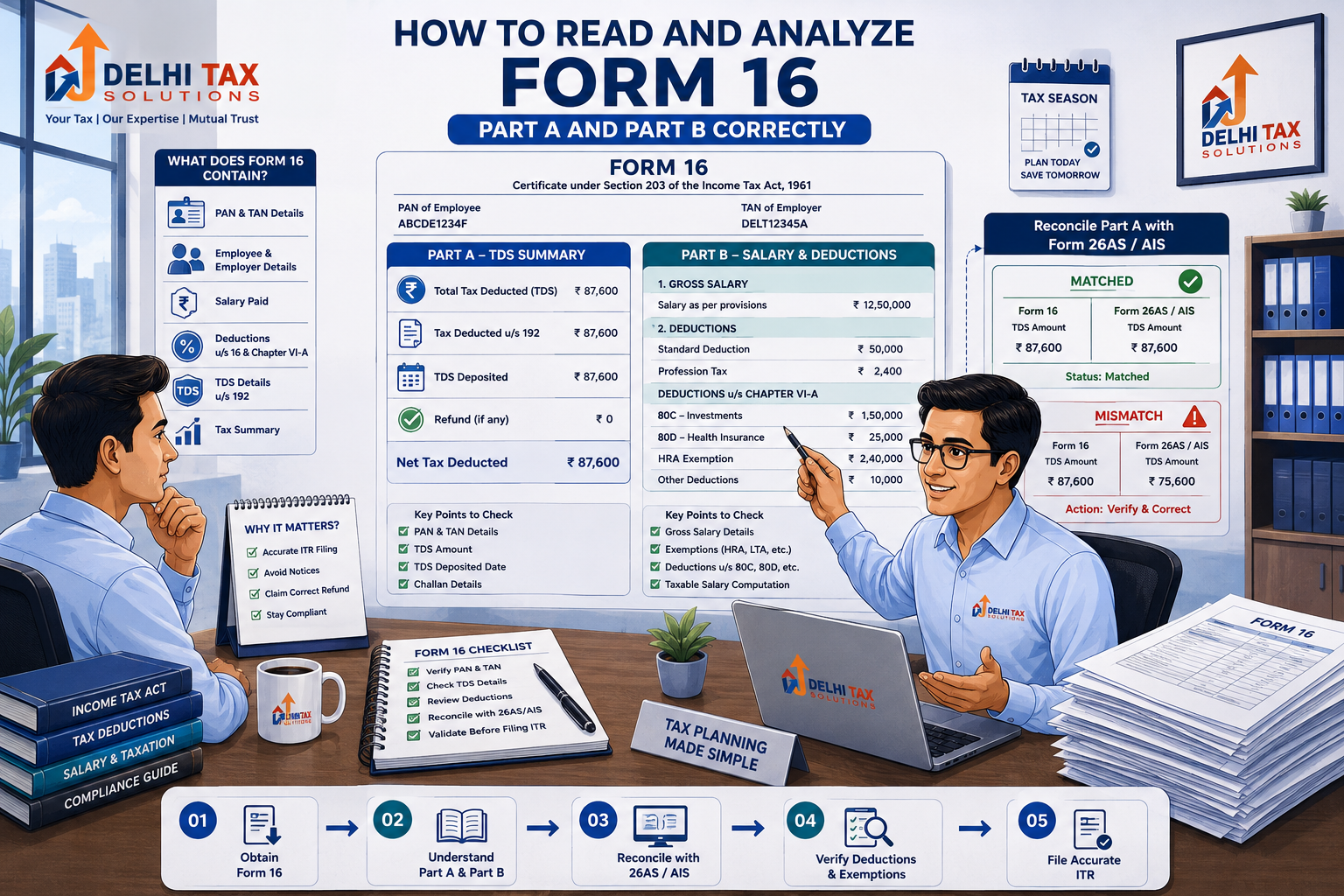
- Form 16 is a vital TDS certificate issued by employers, divided into Part A (TDS summary) and Part B (Salary breakdown and deductions).
- Always cross-verify your Form 16 Part A with your Form 26AS and AIS to ensure there is no tax credit mismatch before filing your returns.
- If your employer defaults on providing Form 16, you can still file your taxes using salary slips and Form 26AS.
- Properly reading Form 16 is the foundational step for accurate Income Tax Filing for salaried individuals.
- Understanding these documents protects you from compliance notices and penalty risks during tax assessments.
For millions of salaried professionals in India, the arrival of Form 16 marks the official start of the tax season. However, despite being a standard annual document, many taxpayers struggle to interpret its various components. Knowing exactly how to read Form 16 Part A and Part B is crucial to avoiding errors that could lead to defective return notices or missed tax refunds. Whether you are employed at an established corporate entity managed under robust Company Registration frameworks or a startup, this comprehensive guide will help you decode your TDS certificate.
Decoding Form 16: Part A vs Part B
What is Form 16 Part A?
Part A of Form 16 acts as the official proof that your employer has deducted tax at source (TDS) from your salary and deposited it with the government. It is generated and downloaded by the employer from the government’s TRACES portal. Key components you must verify include:
- Your employer’s PAN and TAN (Tax Deduction and Collection Account Number).
- Your personal PAN (ensure it is entirely accurate).
- A quarter-wise summary of taxes deducted and deposited.
Employers must adhere to strict TDS Compliance rules to ensure the amounts reflecting here are accurate and deposited on time.
What is Form 16 Part B?
While Part A focuses on the tax deposited, Part B is an annexure prepared by your employer detailing how your taxable income was calculated. It provides a granular breakdown of your financial year, including:
- Gross Salary breakdown (Basic, HRA, Special Allowances).
- Exemptions claimed under section 10 (like House Rent Allowance or LTA).
- Deductions claimed under Chapter VI-A (such as Section 80C investments, 80D medical insurance, etc.).
- Any other income reported to the employer (like income from house property or Property Tax related details you submitted).
Form 16 vs Form 26AS Mismatch: Causes and Solutions
Why Mismatches Happen
A frequent and stressful issue during tax season is a mismatch between the TDS shown in Form 16 Part A and the credit available in Form 26AS (or the Annual Information Statement – AIS). This usually happens because the employer made an error while filing their quarterly TDS returns, entered the wrong PAN, or delayed depositing the deducted tax.
How to Resolve the Mismatch
If you notice a discrepancy, you must immediately contact your employer’s HR or payroll department. Only the deductor (employer) can rectify this error by filing a revised TDS return. Filing your income tax return with mismatched data can trigger an automated notice from the Income Tax Department demanding additional tax payments.
⚡ Crucial Rule
The tax department only gives credit for TDS that appears in your Form 26AS. If a TDS amount is in your Form 16 but missing in Form 26AS, you will not receive credit for it until the employer fixes their filing.
What if Form 16 is Not Issued by the Employer?
Your Rights and Alternatives
According to the Income Tax Act, it is mandatory for an employer to issue Form 16 if TDS has been deducted from your salary, typically by June 15th of the assessment year. However, if an employer defaults or goes out of business, you are not excused from filing your tax return.
You can successfully file your taxes without Form 16 by:
- Collecting all your monthly payslips for the financial year.
- Downloading your Form 26AS and AIS to verify the exact TDS deducted.
- Consolidating your investment proofs and any GST Registration invoices if you run a parallel freelance business.
- Calculating the net taxable income manually or with a professional’s help.
| Document / Aspect | Form 16 Part A | Form 16 Part B |
|---|---|---|
| Source of Generation | Generated only through the TRACES portal. | Prepared by the employer’s payroll software. |
| Primary Focus | Quarterly TDS deposited with the government. | Detailed salary breakdown and deductions. |
| Key Verification Point | Check employer TAN, your PAN, and TDS totals. | Verify gross salary, 80C/80D claims, and net tax payable. |
Streamlining Your Filing Process and Expert Advisory
Maintaining Clear Records
To avoid last-minute panic, regularly review your payslips and monitor your Form 26AS throughout the year. The government, through bodies like the Press Information Bureau, continually emphasizes matching AIS data before filing. Furthermore, individuals with complex financial portfolios regulated by the Reserve Bank of India or who are directors in entities under the Ministry of Corporate Affairs must ensure their salary income perfectly aligns with their overall financial declarations.
Consulting Chartered Accountants
If you have changed multiple jobs in a year, possess multiple Form 16s, or are dealing with a stubborn TDS mismatch, professional assistance is highly recommended. Talk to a Delhi Tax Solutions expert today. Our certified Chartered Accountants will analyze your Form 16, reconcile any discrepancies with your Form 26AS, and guarantee a seamless, error-free tax filing experience.
Mastering how to read Form 16 Part A and Part B is an essential financial skill that empowers you to take control of your tax compliance. Connect with Delhi Tax Solutions to ensure your annual filings are optimized, accurate, and completely stress-free.
About this article: Researched using official government sources and Delhi Tax Solutions’ in-house tax advisory team. Last updated August 2026.
Frequently Asked Questions (FAQs)
Q: What is the difference between Form 16 Part A and Part B?
A: Part A is a certificate generated from the TRACES portal showing the summary of tax deducted (TDS) and deposited by your employer. Part B is an annexure detailing your salary breakdown, allowances, and tax deductions claimed.
Q: How can I read and use Form 16 for income tax filing?
A: Use Part B to input your gross salary, exemptions (like HRA), and Chapter VI-A deductions into the ITR utility. Use Part A to verify that the TDS claimed matches the tax credits available in your Form 26AS.
Q: What should I do if my Form 16 details don’t match Form 26AS?
A: If there is a mismatch, immediately contact your employer. The employer must file a revised TDS return to correct the error. You should only claim TDS that reflects accurately in your Form 26AS to avoid tax notices.
Q: What if my employer refuses or forgets to issue my Form 16?
A: While employers are legally mandated to issue Form 16, you can still file your return without it. Calculate your taxable income using your monthly payslips and verify the TDS deposited using your Form 26AS and AIS.
Q: Can I file my income tax return without Form 16?
A: Yes, you can. You must consolidate your salary slips, verify your tax credits in Form 26AS, gather all investment proofs, and manually calculate your tax liability before filing your ITR.
