
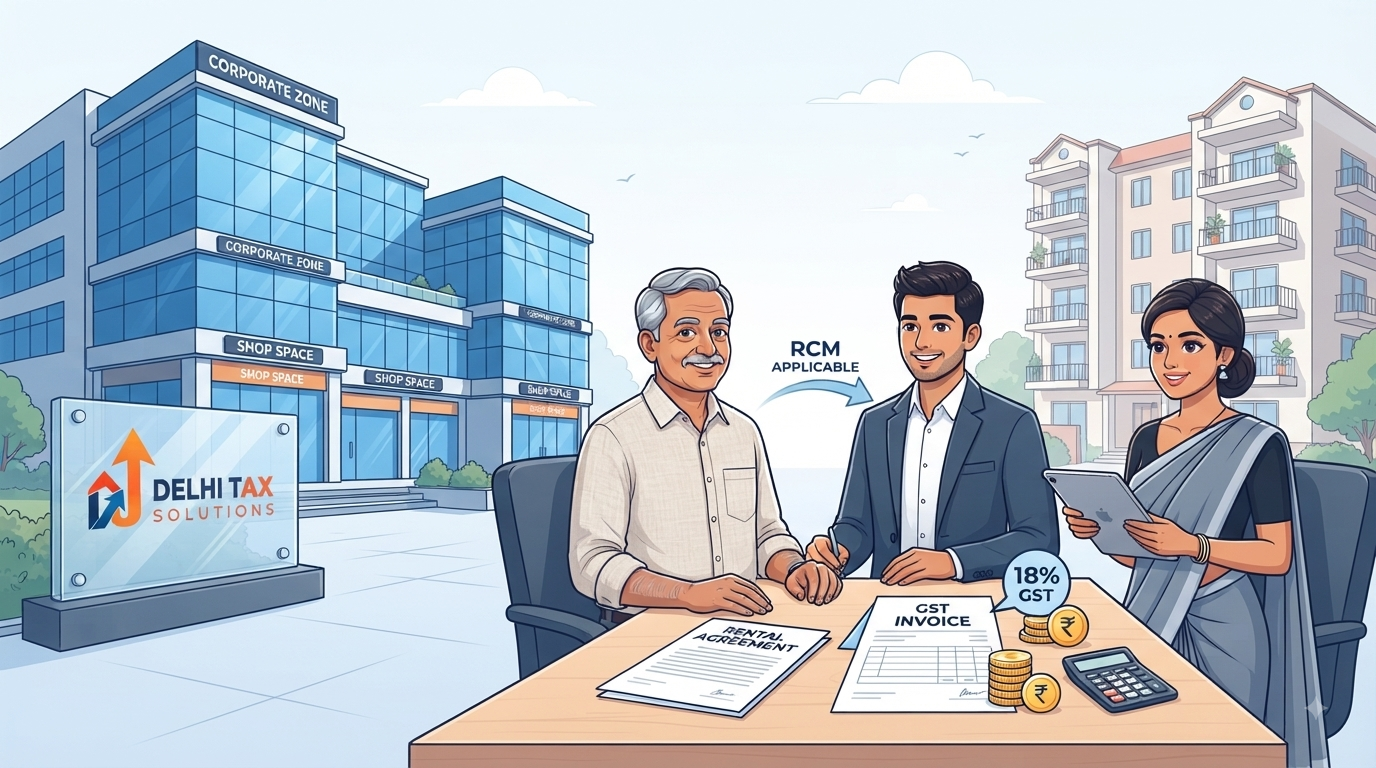
💡 Key Takeaways
- Commercial property rentals attract an 18 percent GST rate under standard supply rules.
- Residential rentals remain exempt when leased to private individuals for personal dwelling use.
- Registered corporate tenants must pay tax directly via the Reverse Charge Mechanism on residential leases.
- Landlords crossing the ₹20 lakh aggregate annual turnover limit must obtain mandatory GST registration.
- Expert CA oversight ensures property lease agreements comply with evolving indirect tax mandates.
Navigating indirect tax compliance as a property owner requires understanding how GST on rental income India regulations impact your monthly lease receipts. When renting out commercial spaces or residential apartments, indirect tax liabilities depend heavily on tenant business registration status and property classification. Many landlords assume rental earnings are strictly governed by income tax laws alone, ignoring federal goods and services tax mandates. Grasping these statutory provisions protects your rental yields and keeps your leasing business audit-ready.
Operating in India’s expanding real estate market means commercial agreements demand rigorous administrative oversight. The Goods and Services Tax Council enforces strict protocols regarding lease invoicing, threshold exemptions, and reverse charge mechanisms. Understanding these rules allows property owners to structure lease contracts accurately and avoid compounding penalties on unpaid tax dues.
What Is GST on Rental Income India and How Does It Apply?
GST on rental income India refers to the indirect tax levied on the leasing or renting of immovable property for commercial or business use under the CGST Act. While renting residential dwellings for personal use enjoys a blanket exemption, commercial property rentals attract an 18 percent standard tax rate. Liability shifts to the tenant under the Reverse Charge Mechanism if the property is rented by a registered corporate entity from an unregistered landlord.
What Are the Compliance Rules for GST on Commercial Rent?
Enforcing GST on commercial rent is mandatory for property owners whose aggregate turnover exceeds the statutory exemption threshold of ₹20 lakh per annum. Commercial spaces, office buildings, warehouses, and retail shops leased out for business activities attract an 18 percent tax rate, which landlords must collect and remit periodically.
According to administrative guidelines published by the Press Information Bureau, commercial lease compliance is strictly monitored through digital invoice matching. For businesses expanding their physical footprint, securing proper Company Registration ensures valid documentation for commercial tenancy agreements.
How Does GST on Residential Rent Impact Landlords and Tenants?
Navigating GST on residential rent requires distinguishing between private personal use and corporate housing arrangements. Renting a residential dwelling to an unregistered individual for personal dwelling use remains fully exempt from indirect taxation. However, if a registered business or corporate entity rents a residential property for employee accommodation or office use, tax compliance obligations shift immediately.
As outlined in official notifications by the Income Tax Department, rental income must be accurately declared under direct tax returns alongside indirect tax filings. Maintaining valid Business Licenses remains essential for property management agencies operating commercial complexes.
How Does Reverse Charge GST on Rent Function for Businesses?
Executing reverse charge GST on rent means the corporate tenant, rather than the property owner, pays the applicable tax directly to the government treasury. Under Section 9(3) of the CGST Act, when a registered business entity rents a residential property from an unregistered landlord, the tenant must self-assess and discharge the 18 percent tax liability via electronic cash ledgers.
Guidance from the Ministry of Corporate Affairs emphasizes that corporate tenants must maintain accurate reverse charge accounting records. Professional assistance through expert GST Registration services keeps lease accounting strictly aligned with current federal thresholds.
What Are the Rules for GST on Rental Property Commercial Guidelines?
Comprehending GST on rental property commercial rules helps property investors calculate net rental yields accurately. Landlords leasing commercial buildings can claim Input Tax Credit on construction materials, repairs, and maintenance services utilized for the property, provided they charge GST on outward lease billings. Reviewing these statutory distinctions highlights the operational advantages of structured commercial leasing.
| Property & Tenant Type | Applicable Tax Rate | Tax Payment Responsibility |
|---|---|---|
| Commercial Property (Any Tenant) | 18% GST | Forward Charge (Paid by Landlord) |
| Residential Dwelling (Private Individual) | 0% (Exempt) | No Tax Applicable |
| Residential Dwelling (Registered Corporate) | 18% GST | Reverse Charge (Paid by Tenant) |
⚡ In a Nutshell
Commercial rentals attract 18 percent GST under forward charge. Residential rentals are exempt for individuals but trigger reverse charge tax when leased to registered corporate entities.
What Is the GST Threshold for Commercial Rental Income in India?
Determining the GST threshold for commercial rental income is critical for small property investors across India. Landlords with aggregate annual turnover from all taxable supplies under ₹20 lakh are exempt from registration. However, crossing this threshold mandates obtaining a GSTIN and filing regular returns. Implementing sound financial practices aligned with Direct Tax Code principles safeguards your real estate investments during tax audits.
Partnering with seasoned tax professionals eliminates administrative guesswork and guarantees complete regulatory alignment across all property lease portfolios.
Conclusion
Mastering rental tax compliance is an essential milestone for every property owner and real estate investor operating in India today. Remember that commercial rent attracts 18 percent GST, residential rentals are exempt for individuals, and corporate leases trigger reverse charge obligations. Do not let complex tax regulations expose your property portfolio to unexpected administrative penalties. Talk to a Delhi Tax Solutions expert to get your lease agreements and tax filings managed accurately by our professional CA team. Proactive compliance secures your financial future.
About this article: Researched using official government sources and Delhi Tax Solutions’ in-house tax advisory team. Last updated August 2026.
Frequently Asked Questions (FAQs)
+ Q: Is GST applicable on residential rental properties in India under current tax rules?
A: Renting a residential dwelling for use as a private residence by an individual tenant remains fully exempt from GST under official government notifications. However, if a residential property is leased to a registered business entity or corporate tenant for commercial or guest-house accommodation, the exemption does not apply. In such corporate arrangements, the registered tenant must pay 18 percent GST under the Reverse Charge Mechanism directly through the GST Portal.
+ Q: What are the specific rules and thresholds for charging GST on commercial rent?
A: Commercial property rentals—including offices, retail shops, and warehouses—attract a standard GST rate of 18 percent. Landlords are required to charge and collect this tax from their tenants on monthly rental invoices, provided their aggregate annual turnover across all business activities exceeds the ₹20 lakh statutory threshold (or ₹10 lakh in special category states). If the landlord’s turnover is below this limit, GST is not charged under forward charge, though corporate tenants may still be liable under reverse charge rules.
+ Q: How does the Reverse Charge Mechanism (RCM) work for rental payments made by registered entities?
A: Under the Reverse Charge Mechanism governed by Section 9(3) of the CGST Act, when a registered corporate entity or business taxpayer rents a residential dwelling from an unregistered landlord, the responsibility for paying the 18 percent tax shifts entirely from the landlord to the tenant. The corporate tenant calculates the tax on the rental invoice, self-assesses the liability, and deposits it directly into the government treasury through their electronic cash ledger, subsequently claiming eligible Input Tax Credits.
+ Q: What is the GST registration threshold for landlords earning rental income from commercial spaces?
A: The general aggregate turnover threshold for mandatory GST registration for service providers and property lessors in India is ₹20 lakh per financial year. If a landlord’s total rental earnings from commercial properties combined with any other taxable business income exceed this ₹20 lakh limit, they must obtain a GSTIN within 30 days of crossing the threshold. Failure to register and remit collected taxes can result in statutory penalties and interest charges levied by tax authorities.
+ Q: Can property owners claim Input Tax Credit on maintenance and construction expenses of rented buildings?
A: Registered property owners who lease out commercial buildings and charge 18 percent GST on outward rentals are generally eligible to claim Input Tax Credit on goods and services used for building maintenance, repairs, and professional facility management. However, claiming ITC on capital goods or construction services for commercial real estate is subject to specific statutory restrictions under Section 17(5) of the CGST Act, making professional CA guidance essential for accurate credit reconciliation.