
💡 Key Takeaways
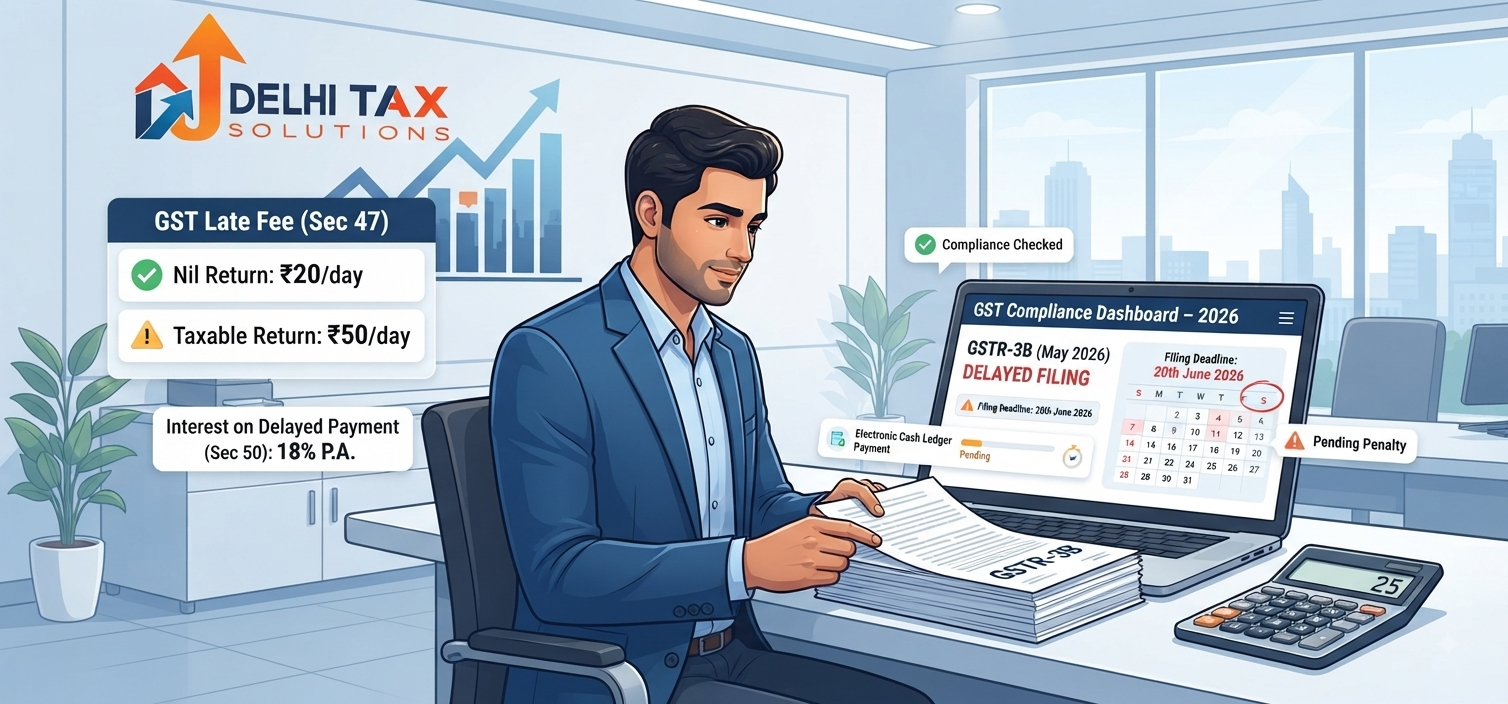
- Delayed filing triggers automatic daily late fees under Section 47 of the CGST Act.
- Interest accrues at 18 percent per annum on delayed tax liability payments under Section 50.
- Nil returns carry lower daily penalty caps compared to taxable outward supply returns.
- Pending late fees must be cleared through the electronic cash ledger before submitting current returns.
- Expert CA intervention protects your enterprise from compounding penalties and portal suspension.
Missing a statutory tax deadline can trigger an immediate financial drain on small businesses across India. When evaluating GST late fee calculation methods, commercial operators seek precise formulas to determine their exact portal liabilities. Many entrepreneurs ignore monthly filing timelines, only to discover compounding penalties locking their return-submitting capabilities. Grasping these statutory fees protects your operating capital and keeps your enterprise audit-ready.
Operating a commercial enterprise in today’s digital economy requires rigorous adherence to federal compliance calendars. The Goods and Services Tax Council enforces strict automated penalties for delayed submissions to encourage prompt reporting. Understanding these statutory provisions allows your organization to streamline administrative records and prevent unexpected cash outflows.
What Is GST Late Fee Calculation and How Are Penalties Assessed?
GST late fee calculation refers to the statutory computation of daily financial penalties levied under Section 47 of the CGST Act for failing to furnish outward and inward return forms by prescribed due dates. Governed by federal tax administration rules, the common portal automatically calculates fees combining Central GST and State GST components. Taxpayers must clear these accumulated dues via their electronic cash ledger before the system permits subsequent return uploads.
How Does the GST Return Late Fee 2026 Apply to GSTR-3B?
Filing summary returns past statutory deadlines invokes specific daily levies that accumulate rapidly. Mastering the GST return late fee 2026 framework ensures your business avoids unexpected portal blocks. For normal taxpayers filing Form GSTR-3B, the daily fee structure applies separately under CGST and SGST enactments.
According to official notifications published by the Press Information Bureau, automated portal algorithms calculate late charges down to the exact day of delay. For startups structuring their operations, securing proper Company Registration establishes a transparent corporate framework from day one.
What Is the Statutory GST Penalty for Non-Filing and Delays?
Persistent failure to submit periodic returns invites severe administrative measures beyond basic late fees. Understanding the GST penalty for non-filing highlights why maintaining regular compliance schedules is critical. When returns remain unfiled for extended periods, tax authorities issue formal notices and restrict e-way bill generation.
As emphasized in administrative circulars by the Income Tax Department, financial irregularities in indirect tax filings often trigger comprehensive corporate audits. For specialized commercial activities, acquiring required Business Licenses remains an essential prerequisite before executing commercial sales.
How Is Interest on Late GST Payment Calculated Under Section 50?
Delaying the actual deposit of collected tax dues attracts mandatory interest charges independent of late filing fees. Calculating interest on late GST payment requires applying statutory percentage rates to the net tax liability settled through the cash ledger. Under Section 50 of the CGST Act, the prescribed interest rate stands at 18 percent per annum.
Guidance from the Ministry of Corporate Affairs underscores that statutory interest cannot be waived by administrative discretion unless a formal government amnesty is active. Professional assistance through expert GST Registration services keeps your filing schedules strictly on track.
Comparing Nil Returns Versus Taxable Returns Fee Structures
The quantum of financial penalties varies significantly depending on whether your periodic return reports taxable outward supplies or zero transactions. Reviewing these threshold differences helps businesses estimate their potential liabilities accurately before logging into the common portal.
| Return Type | Daily Late Fee (CGST + SGST) | Maximum Statutory Cap |
|---|---|---|
| Nil Return (Zero Tax Liability) | ₹20 per day (₹10 CGST + ₹10 SGST) | Capped at ₹500 total per return |
| Taxable Outward Supplies Return | ₹50 per day (₹25 CGST + ₹25 SGST) | Capped based on turnover limits |
| Annual Return (GSTR-9) | ₹200 per day | Capped at 0.50 percent of turnover |
⚡ In a Nutshell
GST late fee calculation involves daily statutory charges under Section 47 combined with 18 percent annual interest under Section 50. Clearing dues promptly via the electronic cash ledger prevents portal blocks.
How Expert CA Guidance Protects Your Enterprise from Penalties
Navigating complex tax compliance mandates requires rigorous internal controls and proactive portal monitoring. Implementing robust financial practices aligned with Direct Tax Code principles safeguards your organization during comprehensive regulatory reviews. Tax authorities actively cross-reference monthly filing logs with annual financial statements to verify accuracy.
Partnering with seasoned tax professionals eliminates administrative guesswork and guarantees complete regulatory alignment across all business filings.
Conclusion
Mastering filing deadlines and penalty structures is essential for every business owner and startup founder operating in India today. Remember that daily late fees under Section 47, statutory interest under Section 50, and proper cash ledger management form the bedrock of clean compliance. Do not let pending filing delays expose your enterprise to compounding financial penalties. Talk to a Delhi Tax Solutions expert to get your GST returns managed accurately and promptly by our professional CA team. Proactive compliance secures your business future.
About this article: Researched using official government sources and Delhi Tax Solutions’ in-house tax advisory team. Last updated August 2026.
Frequently Asked Questions (FAQs)
+ Q: How is GST late fee calculation performed under the CGST Act for delayed GSTR-3B filings?
A: Under Section 47 of the CGST Act, GST late fee calculation is performed automatically by the common portal based on the number of delayed days from the statutory due date. For taxable outward supplies, the fee is calculated at ₹50 per day (₹25 CGST and ₹25 SGST), whereas nil returns attract a reduced fee of ₹20 per day. These accumulated charges are debited directly to the taxpayer’s electronic cash ledger and must be paid in full before filing subsequent monthly returns on the official GST Portal.
+ Q: What is the current interest rate charged on late GST payments under Section 50?
A: The statutory interest rate charged on delayed tax liability payments under Section 50 of the CGST Act is 18 percent per annum. This interest is calculated on the net tax liability settled through the electronic cash ledger for the exact number of days payment was delayed past the statutory due date. Taxpayers must ensure sufficient cash balance is maintained to cover both tax dues and accrued interest to prevent compounding penalties during regulatory audits.
+ Q: What are the maximum late fee caps applicable for nil returns versus taxable outward supplies?
A: For nil returns where zero tax liability is reported, the maximum late fee is capped at ₹500 total (₹250 CGST and ₹250 SGST). For returns with taxable outward supplies, maximum caps vary depending on aggregate annual turnover, though they are subject to statutory limits defined in notifications issued by the GST Council. Annual returns such as GSTR-9 carry a maximum late fee cap of 0.50 percent of the taxpayer’s turnover in the relevant state or union territory.
+ Q: Can taxpayers claim input tax credit or file returns if there are pending late fees?
A: Taxpayers cannot submit current monthly returns or access advanced portal utilities if there are unpaid late fees or interest liabilities pending on their account. The common portal automatically restricts return submission until the electronic cash ledger is updated with sufficient funds to clear all outstanding Section 47 late fees and Section 50 interest charges, ensuring complete compliance before credit claims are processed.
+ Q: Are there any active GST amnesty schemes or fee waivers announced by the GST Council?
A: The GST Council periodically announces conditional amnesty schemes and late fee rationalization notifications to assist taxpayers in clearing historical defaults without prohibitive financial penalties. These schemes typically require delayed returns to be filed within specific window periods while capping maximum late fees at reduced flat amounts like ₹500 or ₹1,000 per return. Businesses should consult professional tax advisors to verify eligibility before filing under active amnesty notifications.