💡 Key Takeaways: SEZ GST Rules
- Zero-Rated Status: Any supply to a Special Economic Zone (SEZ) developer or unit is classified as a zero-rated supply under Section 16 of the IGST Act.
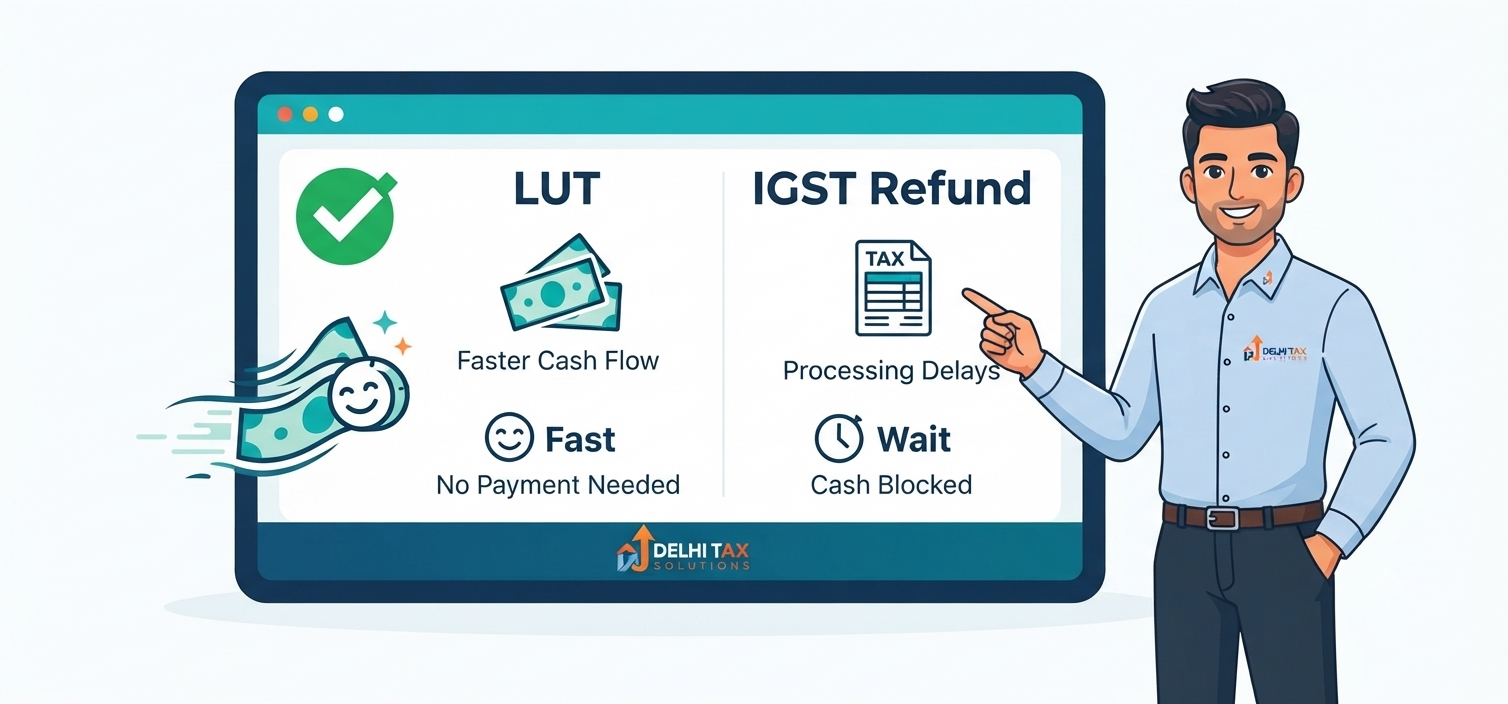
- Two Distinct Paths: Suppliers can either export without payment of tax using a valid Letter of Undertaking (LUT) or pay IGST upfront and claim a full refund later.
- Mandatory Invoice Text: Invoices must carry a highly specific statutory endorsement declaring the supply is for “authorised operations.”
- DTA Reverse Rule: When an SEZ unit sells goods into the Domestic Tariff Area (DTA), it is treated as a regular import, requiring the DTA buyer to file a Bill of Entry and pay Customs duties alongside IGST.
Landing a contract with a client located inside a Special Economic Zone is an exciting milestone for any growing business. However, the moment you prepare to raise your first invoice, a wave of compliance anxiety often hits. Do you charge Central and State GST? Do you charge Integrated tax? Or is the transaction entirely exempt from taxation?
The rules governing a supply to SEZ under GST are highly specific and radically different from standard domestic transactions. Because the government actively incentivizes the development of these zones to boost foreign exchange and economic growth, Indian tax law treats them as foreign territories for the purpose of trade. Understanding how to navigate this fictional border within the country is critical for maintaining your compliance and protecting your working capital.
This comprehensive guide breaks down the mechanics of SEZ taxation, the strict invoicing protocols you must follow in FY 2025-26, and the fastest routes to claim your rightful tax refunds.
What Are SEZ Supplies Under GST?
Under the Integrated Goods and Services Tax (IGST) Act, supplying goods or services to an SEZ unit or an SEZ developer is officially designated as a zero-rated supply. This means the government effectively sets the tax rate on these specific outward supplies to 0%, ensuring that the tax burden does not pass onto entities operating within these specially designated economic zones.
According to the official Central Board of Indirect Taxes guidelines, this zero-rating applies regardless of whether the supplier and the SEZ unit are located in the same state. Even if a business in Noida supplies laptops to an SEZ unit right next door in Noida, the transaction is treated as an interstate supply. Standard intra-state taxes (CGST and SGST) are never applied to SEZ transactions.
Based on cases handled by our CA team, the most common error new businesses make is treating a local SEZ supply as a standard intra-state sale. Doing so instantly triggers compliance notices and traps your working capital in erroneous tax payments that are incredibly difficult to reverse.
The Zero-Rated Supply Framework
The concept of a zero-rated supply to SEZ is distinct from an “exempt supply.” When a product is exempt from GST, the seller cannot claim Input Tax Credit (ITC) on the raw materials used to manufacture that product. Zero-rating is far more beneficial to the business owner.
When you make a zero-rated supply, the outward tax is zero, but you remain fully eligible to claim the input tax credit on all raw materials, software, and services you consumed to execute that order. This unbroken ITC chain ensures that Indian exports and SEZ supplies remain globally competitive by eliminating the cascading effect of hidden taxes.
To execute a zero-rated supply legally, the supplier must verify that the SEZ unit is procuring the goods or services strictly for “authorised operations.” If an SEZ unit buys goods for personal consumption or unauthorized activities outside their approved government charter, the standard IGST rates immediately apply.
Export Under LUT vs. IGST Refund
The law provides suppliers with two distinct procedural pathways to execute a supply to an SEZ. Choosing the correct path depends entirely on your company’s cash flow capabilities and administrative bandwidth.
The first option is supplying under a Letter of Undertaking (LUT). By filing Form GST RFD-11 on the official GST Portal, a supplier formally promises the government that they are making a zero-rated supply. Once the LUT is approved (typically within 24 to 48 hours online), you can issue an invoice with 0% IGST. No funds are locked up with the tax department, making this the preferred route for startups and MSMEs.
The second option is supplying on payment of IGST. Under this method, the supplier charges the standard applicable IGST rate on the invoice, pays this amount out of their own pocket (or via ITC ledger) during the monthly GSTR-3B filing, and subsequently files a dedicated refund application to get the money back from the government. Our advisory desk usually recommends this route only when a supplier has a massive accumulation of ITC they wish to liquidate into cash.
| Feature | Filing via LUT (Without Tax) | Paying IGST (With Refund) |
|---|---|---|
| Working Capital Impact | Zero blockage. Funds remain in your bank. | High blockage until the refund is processed. |
| Pre-requisite Filing | Must file Form GST RFD-11 before invoicing. | No pre-filing required. Invoice immediately. |
| Refund Process | Can claim refund of unutilized input tax credit. | Claim refund of the actual IGST paid on the invoice. |
| Best Suited For | Service providers, MSMEs, tight cash-flow businesses. | Manufacturers with heavy accumulated ITC balances. |
If you are unsure which path optimizes your tax position, reviewing the Letter of Undertaking requirements is an excellent first step before raising any documentation.
Invoicing Rules for SEZ Units
The GST department is notoriously strict regarding the paperwork for zero-rated supplies. A standard domestic tax invoice will not suffice. When raising a sez invoice format under gst, the supplier must include specific statutory endorsements precisely as dictated by the GST Council.
If you are supplying under an active LUT, your invoice must clearly state: “SUPPLY TO SEZ UNIT OR SEZ DEVELOPER FOR AUTHORISED OPERATIONS UNDER BOND OR LETTER OF UNDERTAKING WITHOUT PAYMENT OF INTEGRATED TAX.” Failing to include this exact phrase can result in the assessing officer treating the invoice as a regular taxable supply during an audit, demanding immediate payment of tax plus steep interest penalties.
Conversely, if you choose the tax-payment route, the invoice must read: “SUPPLY TO SEZ UNIT OR SEZ DEVELOPER FOR AUTHORISED OPERATIONS ON PAYMENT OF INTEGRATED TAX.” Alongside these endorsements, the invoice must capture the valid GSTIN of the SEZ unit and clearly categorize the tax levied solely under the IGST column.
Struggling with SEZ Invoicing and Refunds?
One minor error in an SEZ invoice endorsement or a delayed RFD-11 filing can lock your working capital in the GST portal for months.
The expert tax consultants at Delhi Tax Solutions can help you secure your LUT instantly, optimize your invoice templates, and expedite your GST refund claims with the department.
Input Tax Credit on SEZ Sales
A major relief for DTA suppliers is the unhindered flow of Input Tax Credit. When you execute a zero rated supply to sez, you are not collecting tax from your customer. However, you likely paid GST to your own vendors for office rent, computers, raw materials, or software licenses needed to fulfill that SEZ contract.
The law permits you to accumulate this ITC in your electronic credit ledger. If you operate primarily under the LUT model, this ITC will pool up over time. To prevent this capital from stagnating, Section 54 of the CGST Act allows you to file a refund application (Form GST RFD-01) to claim this unutilized input tax credit directly into your bank account.
Our firm consistently observes that refund applications accompanied by tight documentation—including a clearly mapped matching of inputs to zero-rated outputs—are processed much faster. Proper GST registration hygiene, timely GSTR-1 filings, and ensuring your vendors have uploaded their invoices in GSTR-2B are mandatory prerequisites for a smooth refund experience.
Handling SEZ to DTA Sales
The conversation around SEZ compliance usually focuses on DTA suppliers. But what happens when the transaction reverses, and a unit located inside the SEZ sells goods to a regular business in the Domestic Tariff Area? The tax treatment flips entirely.
Because the SEZ is deemed a foreign territory, goods moving from an SEZ to the DTA are treated strictly as physical imports into India. According to the SEZ India Official Authority, the SEZ unit does not charge GST on their invoice. Instead, the DTA buyer is responsible for filing a Bill of Entry with Customs.
The DTA buyer must pay Basic Customs Duty (BCD) alongside the applicable IGST directly to the Customs department before the goods can leave the physical boundaries of the SEZ. This reverse mechanism ensures parity, preventing SEZ units from unfairly undercutting domestic manufacturers who lack similar tax exemptions.
Mastering these dual dynamics ensures your business never falters on compliance, whether you are acting as the supplier or the domestic buyer. The key to seamless SEZ transactions lies in proactive planning, correct invoice phrasing, and leveraging the LUT facility to protect your cash reserves. Talk to a Delhi Tax Solutions expert to get your GST compliance structured perfectly within three days. Operating strictly by the book today prevents massive tax demands tomorrow.
Frequently Asked Questions (FAQs)
+ Q: Is GST applicable on supply of services to an SEZ?
A: Yes, GST law treats the supply of both goods and services to an SEZ unit as an interstate zero-rated supply. You do not need to collect standard CGST/SGST. You must either supply the services under a valid Letter of Undertaking (LUT) without charging tax, or charge IGST on the invoice and later claim a full refund from the department.
+ Q: Can we supply to an SEZ without an LUT?
A: Yes, you can supply to an SEZ without filing an LUT, but it completely changes your billing method. Without an active LUT, you are legally required to charge the standard applicable Integrated GST (IGST) rate on your invoice. You must pay this tax amount to the government during your GSTR-3B filing and subsequently file a refund application to recover it.
+ Q: What is the time limit to claim a GST refund for SEZ supplies?
A: According to Section 54 of the CGST Act, a supplier must file their application for an IGST refund or unutilized Input Tax Credit within two years from the relevant date. For the supply of goods to an SEZ, the relevant date is generally the date on which the goods are admitted in full into the Special Economic Zone.
+ Q: Do SEZ units need to pay GST when selling to DTA?
A: When an SEZ unit sells goods to a regular business in the Domestic Tariff Area (DTA), the transaction is legally treated as an import into India. The SEZ does not charge standard GST; instead, the DTA buyer must file a Bill of Entry with Customs and pay Basic Customs Duty along with Integrated GST directly to the Customs authority.
+ Q: What endorsement is mandatory on an SEZ GST invoice?
A: The GST Council mandates exact text. If supplying under an LUT, the invoice must read: “SUPPLY TO SEZ UNIT OR SEZ DEVELOPER FOR AUTHORISED OPERATIONS UNDER BOND OR LETTER OF UNDERTAKING WITHOUT PAYMENT OF INTEGRATED TAX.” If paying tax, replace the ending with “…ON PAYMENT OF INTEGRATED TAX.” Missing this endorsement can lead to refund rejection.
About this article: Researched using official government sources, real-time competitor and search-trend analysis, and Delhi Tax Solutions’ in-house tax advisory team. Last updated September 2026.
Disclaimer: This article is for general informational purposes and is not a substitute for personalised professional tax advice. Please consult a qualified tax advisor or Chartered Accountant to ensure full compliance.