💡 Key Takeaways: Section 87A Tax Rebate
- Zero Tax Liability: Section 87A allows eligible resident individuals to reduce their income tax liability to zero if their net taxable income is within prescribed limits.
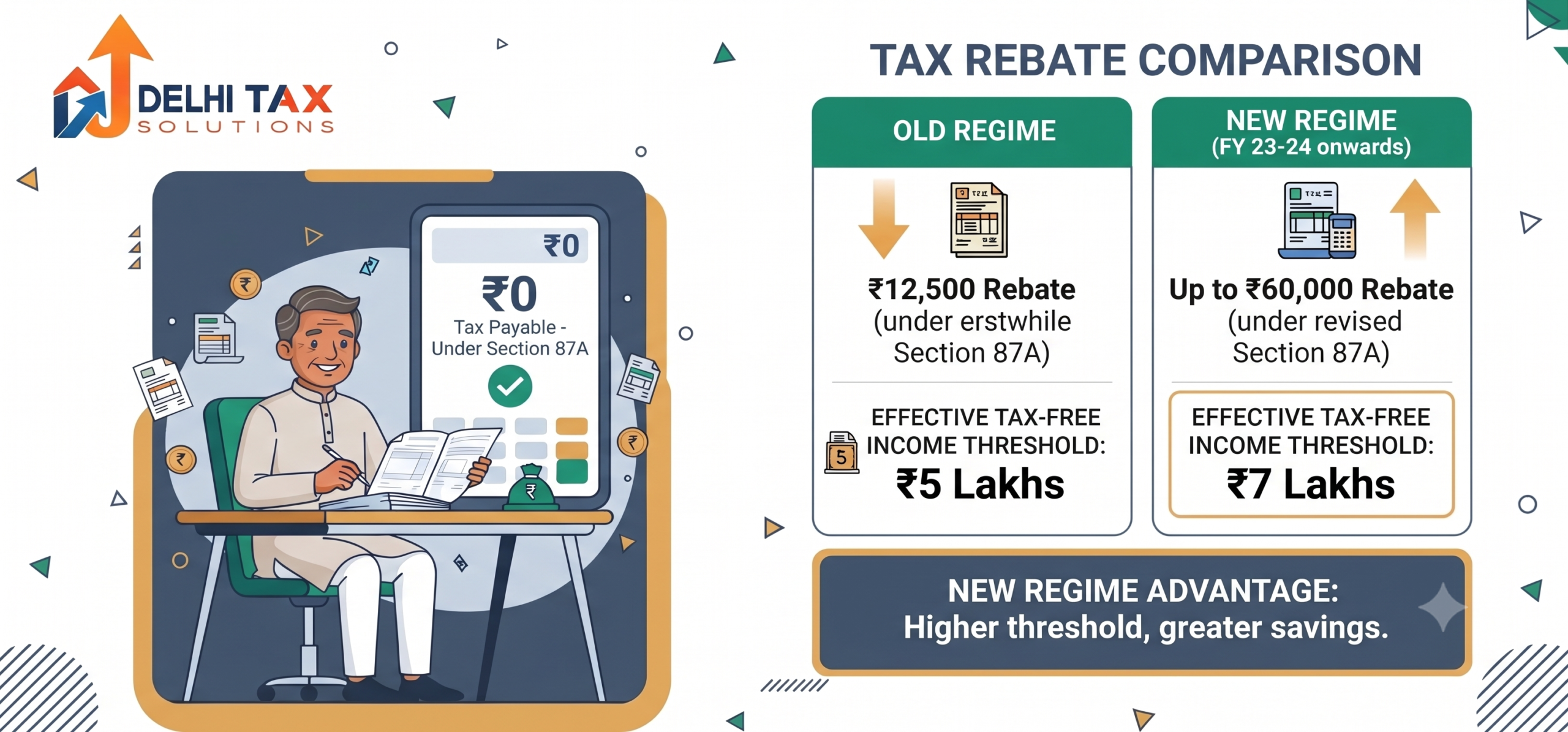
- Regime-Based Limits: The threshold for the rebate is up to ₹5,00,000 under the old tax regime (max rebate ₹12,500) and significantly higher under the new tax regime.
- Resident Individuals Only: The benefit is strictly restricted to resident individuals; NRIs, HUFs, and corporate entities cannot claim it.
- Special Income Exclusion: Capital gains taxed at special rates (such as STCG under Section 111A or LTCG under Section 112A) do not qualify for the Section 87A rebate.
When tax season arrives, understanding how to minimize your financial burden is crucial for effective tax planning. One of the most powerful provisions for middle-income earners under the Indian Income Tax Act is Section 87A.
Originally designed to provide financial relief to smaller taxpayers, Section 87A has evolved significantly, particularly with structural updates under the new tax regime. This guide breaks down everything you need to know about eligibility, threshold limits, and practical examples.
What is Section 87A Tax Rebate?
Section 87A allows eligible individual taxpayers to claim a rebate on their income tax liability. Simply put, if your total taxable income falls below the specified threshold, the government steps in to waive your tax up to a maximum limit, effectively bringing your net income tax payable to zero.
The rebate is deducted from your income tax calculated on slab rates before the addition of the 4% Health and Education Cess. According to guidelines issued by the Income Tax Department, taxpayers must carefully compute their net taxable income after deductions to determine their eligibility.
Eligibility Criteria for Section 87A Rebate
Not every taxpayer can claim this benefit. To qualify for a Section 87A rebate, you must meet the following strict criteria:
- Resident Individual Only: The rebate is exclusively available to resident individuals. Non-Resident Indians (NRIs), Hindu Undivided Families (HUFs), Association of Persons (AOPs), and corporate entities are entirely ineligible.
- Net Taxable Income Threshold: Your total taxable income (Gross Total Income minus permissible deductions) must not exceed the prescribed limit for the chosen tax regime.
- Exclusion of Special-Rate Incomes: Income taxed at special, flat rates—such as long-term capital gains (LTCG u/s 112A) or short-term capital gains on equities (STCG u/s 111A)—does not qualify for the Section 87A rebate.
Comparison: Old vs. New Tax Regime Limits
The threshold limits and maximum rebate amounts vary depending on the tax structure you choose when filing your income tax return:
| Tax Parameter | Old Tax Regime | New Tax Regime |
|---|---|---|
| Net Taxable Income Limit | Up to ₹5,00,000 | Up to ₹12,00,000 |
| Maximum Rebate Amount | Up to ₹12,500 | Up to ₹60,000 |
| Effective Zero Tax Income (Salaried) | ₹5,50,000 (incl. ₹50k Standard Deduction) | ₹12,75,000 (incl. ₹75k Standard Deduction) |
As per CBDT circulars, salaried individuals benefit from standard deductions which further raise the gross salary threshold that can achieve zero tax liability.
Practical Calculation Examples
To understand how the rebate applies in real-world scenarios, let us examine common taxpayer cases under the new tax regime:
- Salaried Individual with Full Rebate: If a taxpayer has a gross salary of ₹12,50,000, subtracting the standard deduction of ₹75,000 results in a net taxable income of ₹11,75,000. The tax computed on slab rates equals ₹57,500. Since this is under the ₹60,000 rebate ceiling, the Section 87A rebate offsets the entire amount, leaving net tax payable at ₹0.
- Income Exceeding the Threshold (Marginal Relief): When taxable income crosses the threshold limit (e.g., slightly above ₹12,00,000), marginal relief rules under the Income Tax Act ensure that the extra tax payable does not exceed the extra income earned above the threshold.
Confused About Tax Regimes and Rebate Eligibility?
Choosing between the old and new tax regimes and calculating your precise net taxable income requires careful evaluation of deductions and special incomes.
The expert tax consultants at Delhi Tax Solutions can help you optimize your tax filings, ensure accurate rebate claims under Section 87A, and file your ITR accurately before the due date.
Frequently Asked Questions (FAQs)
+ Q: Can non-resident Indians (NRIs) claim the Section 87A tax rebate?
A: No. Section 87A rebate is exclusively available to resident individuals under the Income Tax Act. Non-Resident Indians (NRIs), Hindu Undivided Families (HUFs), partnership firms, and corporate bodies cannot claim this rebate regardless of their total income level.
+ Q: Does the Section 87A rebate apply to capital gains on shares or mutual funds?
A: Special-rate incomes such as short-term capital gains under Section 111A or long-term capital gains under Section 112A are excluded from Section 87A rebate calculations. The rebate can only offset tax calculated on normal slab-rate income.
+ Q: What is the maximum rebate amount available under the new tax regime?
A: Under the new tax regime, the maximum tax rebate under Section 87A is available up to ₹60,000 for eligible resident individuals whose net taxable income does not cross the prescribed threshold limit of ₹12,00,000.
+ Q: How does standard deduction affect the Section 87A rebate calculation?
A: Standard deduction reduces your gross total income to arrive at the net taxable income. For salaried taxpayers under the new tax regime, a standard deduction of ₹75,000 means individuals earning up to ₹12,75,000 can effectively bring their taxable income down to the ₹12,00,000 threshold and claim zero tax.
About this article: Researched using official government sources, real-time competitor and search-trend analysis, and Delhi Tax Solutions’ in-house tax advisory team. Last updated September 2026.
Disclaimer: This article is for general informational purposes and is not a substitute for personalised professional tax advice. Please consult a qualified tax advisor or Chartered Accountant to ensure full compliance.