💡 Key Takeaways
- E-Way Bill generation blocks automatically after non-filing of two consecutive GSTR-3B or CMP-08 returns.
- Filing pending GST returns restores E-Way Bill access automatically within 24 hours across the system.
- Manual unblocking requires submitting Form GST EWB-05 online to your jurisdictional tax officer with valid cause.
- Restricted GSTINs prevent suppliers, recipients, and transporters from generating fresh E-Way Bills for goods movement.
- Proactive compliance prevents transit delays, vehicle detentions, and harsh penalties under Section 129 of CGST Act.
A sudden restriction on your GST portal can stall logistics operations instantly. When **Block Unblock E-Way Bill Generation** mechanisms kick in, tax compliance transforms directly into an operational bottleneck for dispatch teams. Under Indian GST law, the E-Way Bill system blocks non-compliant GSTINs to enforce timely return filing across supply chains. If your business fails to submit required monthly or quarterly returns, the system revokes your facility to issue consignment documents automatically.
This comprehensive operational guide details the legal triggers under Rule 138E, how automatic unblocking works, and the step-by-step procedure for filing Form GST EWB-05. Whether you manage a small enterprise or oversee nationwide freight dispatches, mastering these rules keeps your commercial transport running smoothly without legal interruptions.
What Is E-Way Bill Blocking under Rule 138E?
Under Rule 138E of the CGST Rules 2017, the GST system restricts **Block Unblock E-Way Bill Generation** for any registered taxpayer who fails to file their GST returns for two or more consecutive tax periods. This restriction prevents the blocked GSTIN from generating E-Way Bills as a supplier, recipient, or transporter, halting commercial goods movement valued over ₹50,000 until statutory returns are brought fully up to date.
Why Does the GST Portal Block E-Way Bill Generation?
The primary objective of Rule 138E is enforcing discipline in return submissions. Tax authorities monitor compliance trends through automated data cross-matching between the common portal and the E-Way Bill server.
Trigger Conditions for Regular Taxpayers
For regular taxpayers filing monthly or quarterly returns, blocking triggers when Form GSTR-3B remains unfiled for two consecutive months or quarters. For instance, if a business misses filing GSTR-3B for both April and May, the system automatically flags the GSTIN on the E-Way Bill System Portal on the 1st of the subsequent month. GSTR-1 non-filing also leads to sequential restrictions under current GST compliance framework updates.
Trigger Conditions for Composition Taxpayers
Taxpayers under the GST Composition Scheme face blocking if statement Form GST CMP-08 is unfiled for two consecutive quarters. Missing quarterly statement submissions signals potential revenue leakage, prompting immediate automated restrictions on interstate and intrastate movement documentation.
How to Unblock E-Way Bill Facility Automatically
The fastest path to restoring your transport clearance relies on full return submission. Automatic unblocking requires no manual petitions if you clear all outstanding return backlogs promptly through the official portal.
Step-by-Step Return Filing for Automatic Unblocking
First, log in to the official GST Portal and identify all pending tax periods. File your outstanding Form GSTR-3B or CMP-08 statements alongside late fees and applicable interest under Section 50 of the CGST Act. Once return filing receipts generate successfully, the GST system transmits filing updates to the E-Way Bill server automatically.
Checking Unblocking Status on the EWB Portal
System synchronization usually completes within 24 hours. To expedite update verification, visit the E-Way Bill portal, navigate to ‘Search’, and click ‘Update Unblock Status’. Enter your GSTIN and click ‘Update status from GST Common Portal’. This manual refresh fetches real-time return data directly, restoring E-Way Bill generation privileges instantly if return filings reflect accurately.
⚡ Quick Summary
If your E-Way Bill generation is blocked due to unfiled GSTR-3B returns, simply file your pending returns online. The portal unblocks your GSTIN automatically within 24 hours. For emergency dispatches where return filing is delayed due to legitimate financial or technical reasons, submit Form GST EWB-05 to your jurisdictional tax officer for manual relief.
Manual Unblocking Process via Form GST EWB-05
When financial constraints or official portal glitches prevent immediate return filing, taxpayers can seek manual intervention. Rule 138E allows taxpayers to apply directly to their jurisdictional tax officer for temporary unblocking.
How to File Form GST EWB-05 Online
Log in to the GST Portal and navigate to Services > User Services > My Applications. Select ‘Application for unblocking of E-Way Bill’ from the application drop-down menu. Complete Form GST EWB-05 by stating specific reasons for non-filing, such as severe cash flow hardship, bank account attachment, or operational disruptions. Attach supporting documents, including financial statements or legal notices, before signing digitally with DSC or EVC.
Role of the Jurisdictional Tax Officer & Form GST EWB-06 Order
Upon receiving Form GST EWB-05, the jurisdictional tax officer reviews your submission under principles of natural justice. Based on cases handled by our CA team, officers typically request a brief personal hearing or additional proof before deciding. If satisfied with your grounds, the officer issues a formal online order in Form GST EWB-06 approving manual unblocking for a specified period. If rejected, a detailed order detailing reasons is uploaded to your dashboard.
| Comparison Parameter | Automatic Unblocking | Manual Unblocking (EWB-05) |
|---|---|---|
| Primary Prerequisite | Filing all pending GSTR-3B / CMP-08 returns | Submitting Form GST EWB-05 with valid grounds |
| Turnaround Time | Automated within 24 hours after filing | 7 to 15 working days based on officer review |
| Tax Officer Approval Required? | No officer interaction needed | Yes, approval issued via Form GST EWB-06 |
| Validity Period | Permanent until future non-compliance occurs | Temporary period granted by jurisdictional officer |
Impact of E-Way Bill Blocking on Transport & Business Operations
Operating a business with blocked E-Way Bill access introduces severe commercial hazards across your supply network. Understanding statutory penalties ensures your management team prioritizes timely compliance.
Risks during Goods Transit Without Valid EWB
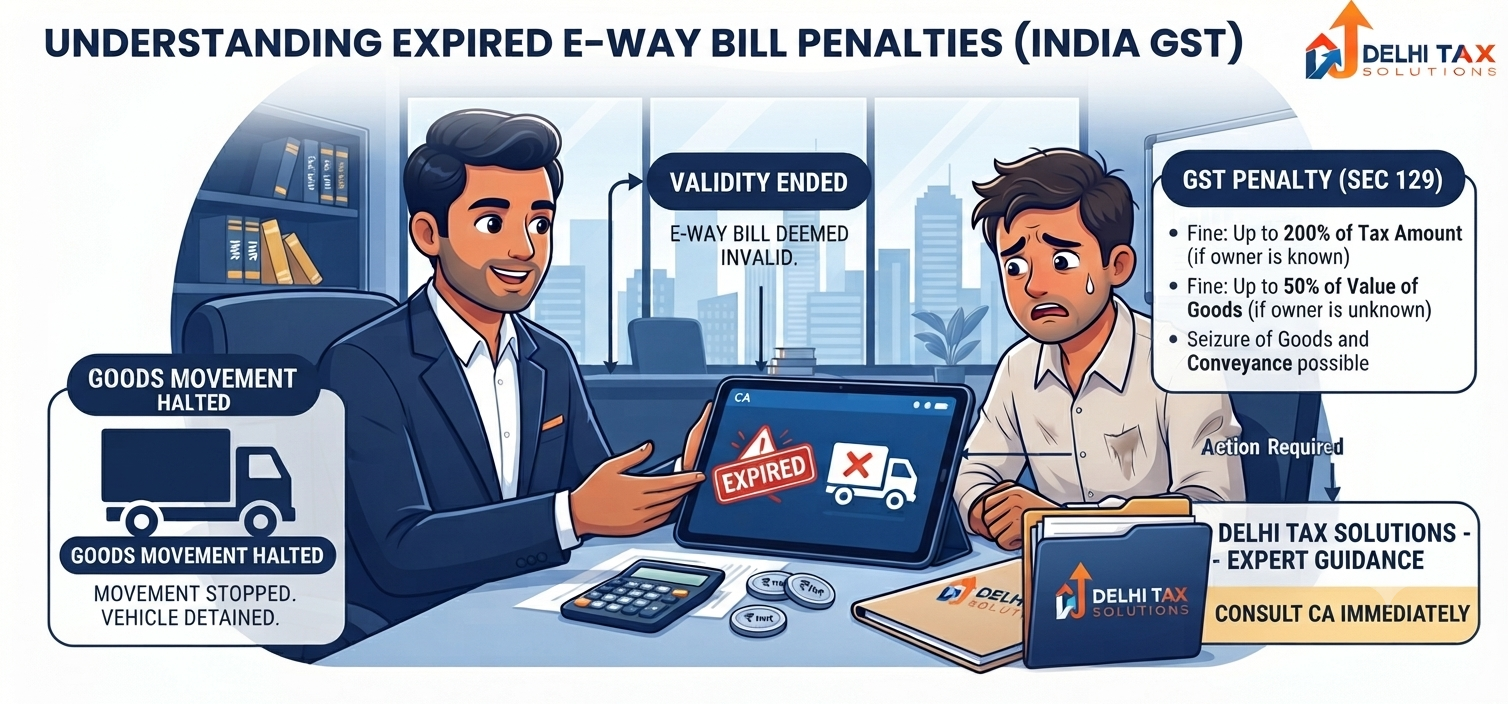
Attempting to transport goods valued over ₹50,000 without an active E-Way Bill violates Section 68 of the CGST Act. Tax enforcement squads intercepting non-compliant goods issue detention orders under Section 129. Statutory penalties equal 200% of the tax payable on taxable goods, causing severe financial loss and physical consignment seizure.
Best Practices to Prevent EWB Blocking
To ensure seamless transportation, maintain an internal compliance calendar. Link your ERP system with automated GST filing software to ensure GSTR-1 and GSTR-3B filings execute smoothly before due dates. Businesses seeking comprehensive regulatory support can explore our specialized GST Compliance Services to manage recurring returns efficiently.
Frequently Asked Questions (FAQs)
+ Q: What triggers automatic Block Unblock E-Way Bill Generation on the GST portal?
A: Automatic blocking triggers under Rule 138E of the CGST Rules when a registered taxpayer fails to file Form GSTR-3B or Form GST CMP-08 for two consecutive tax periods. Once triggered, the common portal restricts the GSTIN from generating fresh E-Way Bills across all roles—whether as a supplier, recipient, or transporter—until all overdue returns are filed.
+ Q: How long does the E-Way Bill system take to unblock after filing GSTR-3B?
A: System synchronization typically takes up to 24 hours following successful return submission on the GST Portal. Taxpayers requiring immediate dispatch clearance can speed up status restoration manually by logging into the official portal at ewaybillgst.gov.in, visiting the ‘Search’ tab, selecting ‘Update Unblock Status’, and executing an instant system refresh.
+ Q: How can I manually apply to unblock E-Way Bill generation using Form GST EWB-05?
A: Taxpayers experiencing genuine hardships submit Form GST EWB-05 online via the GST Portal under Services > User Services > My Applications. State valid grounds preventing return filing, attach financial or operational documentation, and submit using DSC or EVC. Your jurisdictional tax officer reviews the petition and issues an unblocking approval or rejection order via Form GST EWB-06.
+ Q: What happens if a vehicle transports goods while E-Way Bill generation is blocked?
A: Transporting taxable goods valued above ₹50,000 without a valid E-Way Bill violates Section 68 of the CGST Act. Intercepted vehicles face immediate detention under Section 129. Authorities impose a statutory penalty equal to 200% of the tax payable on taxable goods, and vehicles remain impounded until full penalty payments are deposited with tax authorities.
+ Q: Can a recipient or transporter generate an E-Way Bill if the supplier’s GSTIN is blocked?
A: No, the E-Way Bill system completely restricts documentation for a blocked GSTIN across all system permissions. Neither the supplier, the recipient, nor the third-party transporter can generate an E-Way Bill linked to the blocked GSTIN. The non-compliant party must clear pending filings or secure temporary unblocking before outward or inward movement dispatches can resume.
Resolve Your E-Way Bill Blocking Issues Today
E-Way Bill restrictions stop supply chains and risk harsh transit penalties. Restoring your GSTIN requires prompt return filings or meticulous representation before jurisdictional tax officers with Form GST EWB-05.
Our CA-led team at Delhi Tax Solutions helps businesses resolve portal blocking, draft legal petitions, and handle complete tax compliance smoothly. Contact our tax experts today to keep your dispatches moving without disruption.
About this article: Researched using official government sources, real-time competitor and search-trend analysis, and Delhi Tax Solutions’ in-house tax advisory team. Last updated September 2026.
Disclaimer: This article is for general informational purposes and is not a substitute for personalised professional tax advice.