
💡 Key Takeaways
- HSN codes classify physical goods under a globally recognized standardized numbering system.
- SAC codes categorize intangible services under dedicated service accounting classifications.
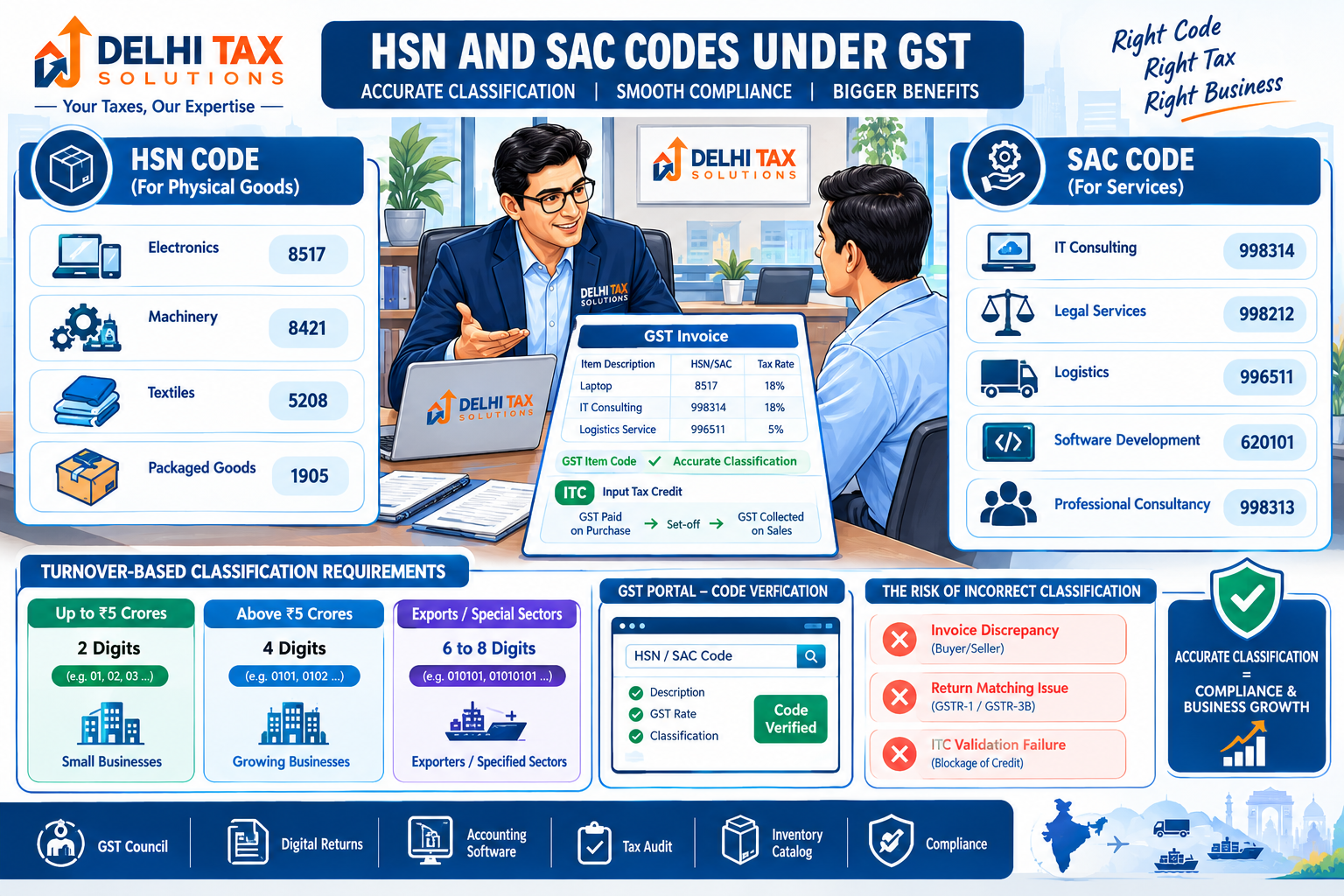
- Annual turnover thresholds determine whether businesses must quote 2, 4, or 6 digits.
- Incorrect classification codes trigger automated return matching errors on tax portals.
- Accurate code selection ensures seamless input tax credit validation for corporate clients.
Issuing tax invoices requires precise product identification. Entering a random item description without a standardized classification breaks automated tax matching. When your corporate buyers cannot validate their input tax credits due to incorrect item numbers, payments freeze and business relationships suffer. Understanding structured nomenclature is essential for every commercial enterprise.
India’s indirect tax framework relies on internationally recognized coding systems to maintain uniformity across state borders. Every traded commodity and professional service maps to a specific numeric identifier. Knowing how these numbers function protects your operating margins and prevents regulatory notices.
This guide breaks down the core structural divisions, examines the exact role of each gst item code, and explains mandatory digit thresholds for current compliance. Let us examine how classification operates in practice.
What Is an HSN Code in GST?
An Harmonized System of Nomenclature (HSN) code is a multi-digit numerical identifier developed by the World Customs Organization to classify physical goods systematically. Under the Goods and Services Tax framework, every tangible commodity traded across domestic and international markets must carry its designated HSN code on commercial invoices. This standardized numbering eliminates language barriers and ensures uniform tax rate application nationwide.
The system is organized hierarchically into chapters, headings, and subheadings. For example, electronic equipment falls under specific chapter groups distinct from agricultural machinery or textiles. Using the correct hsn code guarantees that your billing aligns perfectly with official CBIC tariff notifications, shielding your enterprise from unexpected audit penalties.
Understanding SAC Codes for Intangible Services
While physical commodities rely on HSN nomenclature, intangible professional services utilize Service Accounting Codes (SAC). Developed directly by the Central Board of Indirect Taxes and Customs, every service—ranging from legal consultancy and software development to freight transport and housekeeping—carries a unique six-digit sac code starting with the prefix ’99’.
Distinguishing between goods and services prevents reporting errors in monthly and annual returns. When billing clients for professional deliverables, incorporating the accurate service code ensures your output tax liability matches your service category definition without administrative friction.
Mandatory Digit Requirements Based on Turnover
Tax regulations do not enforce identical digit lengths across all businesses; requirements scale according to annual aggregate turnover. Understanding these statutory brackets prevents unnecessary administrative overhead while maintaining full legal alignment.
Businesses with a turnover below the specified statutory threshold may use fewer digits for B2C transactions, while larger enterprises must provide granular detail. The exact turnover brackets and corresponding mandatory digit counts are structured as follows:
| Annual Turnover Slab | Mandatory Digits | Application Context |
|---|---|---|
| Up to ₹5 Crores | 2 Digits (B2B) / Optional (B2C) | Small businesses and boutique retail operations |
| Exceeding ₹5 Crores | 4 Digits Mandatory | Mid-sized manufacturing and trading enterprises |
| Export & Special Sectors | 6 to 8 Digits Mandatory | International trade, chemicals, and specialized goods |
How Classification Impacts Invoicing and Compliance
Accurate classification directly influences return filing and tax credit verification. When you generate an invoice, automated systems cross-reference your product codes against active tax slab tables. According to updates published by the Press Information Bureau, real-time return matching algorithms instantly flag mismatched entries, delaying credit approvals for your customers.
Maintaining pristine ledger records safeguards your enterprise during government reviews. Founders should verify their accounting software inventories against official directories hosted on the Official GST Portal. New ventures often streamline this setup by engaging professional GST Registration advisory services.
What Our CA Team Sees In Practice
Theoretical guidelines differ significantly from daily operational realities. Based on cases handled by our CA team, the most frequent compliance error occurs when businesses bundle diverse product lines under a single generic code. For instance, a tech hardware supplier billing both IT accessories and heavy machinery under one broad category frequently triggers automated discrepancy notices from tax authorities.
Another recurring pitfall involves growing startups crossing the ₹5 crore turnover threshold without upgrading their invoicing software from 2-digit codes to 4-digit codes. This oversight results in rejected e-invoices and delayed customer disbursements. We strongly advise clients utilizing our Start a Business framework to conduct bi-annual inventory audits to verify classification accuracy.
Furthermore, maintaining flawless indirect tax structures protects overall corporate standing. Integrating precise item coding with timely Income Tax Filing schedules and securing necessary Business Licenses ensures complete statutory alignment across all regulatory bodies.
Conclusion
Using correct HSN and SAC codes ensures smooth invoice generation, prevents credit validation mismatches, and safeguards your enterprise from regulatory scrutiny. Aligning your digit requirements with your annual turnover threshold keeps your operations fully compliant.
Need guidance verifying your product classifications or setting up accurate billing structures? Talk to a Delhi Tax Solutions expert to get your compliance framework fully optimized today.
Frequently Asked Questions (FAQs)
Q: What is an HSN code, and why is it mandatory on Indian tax invoices?
A: An HSN code stands for Harmonized System of Nomenclature, a standardized numerical method used globally to classify physical commodities. Under Indian tax laws, including these codes on commercial invoices is mandatory to ensure uniform tax slab application, eliminate classification disputes, and enable seamless input tax credit verification across state borders.
Q: What is the difference between an HSN code and a SAC code?
A: The primary difference lies in the nature of the transaction: HSN codes classify tangible physical goods, whereas Service Accounting Codes (SAC) categorize intangible services such as IT consulting, legal advisory, and logistics. Both systems use structured numeric hierarchies established by regulatory authorities to govern commercial invoicing accurately.
Q: How many digits must businesses include on their invoices based on annual turnover?
A: Statutory rules dictate that businesses with an annual turnover up to ₹5 crores must report at least 2 digits for B2B invoices. Enterprises exceeding ₹5 crores in turnover must mandatory report 4-digit codes on all outward supplies, while international export transactions require 6 to 8 digits for comprehensive customs compliance.
Q: Where can taxpayers search and verify official HSN codes for their specific products?
A: Taxpayers can search and verify official HSN and SAC codes directly using the search utility provided on the official GST portal. Ensuring your inventory aligns perfectly with these certified government databases prevents invoice rejections and protects your business from automated discrepancy notices during tax filings.
Q: What penalties apply if a business enters an incorrect HSN or SAC code on a return?
A: Entering incorrect classification codes can lead to miscalculated tax rates, invalidating your customers’ input tax credit claims and triggering vendor disputes. Tax authorities can levy financial penalties for issuing erroneous invoices and failing to maintain proper statutory records under the governing provisions of the GST Act.
This article is for general informational purposes and is not a substitute for personalised professional tax advice. About this article: Researched using official government sources, real-time competitor and search-trend analysis, and Delhi Tax Solutions’ in-house tax advisory team. Last updated September 2026.
