💡 Key Takeaways
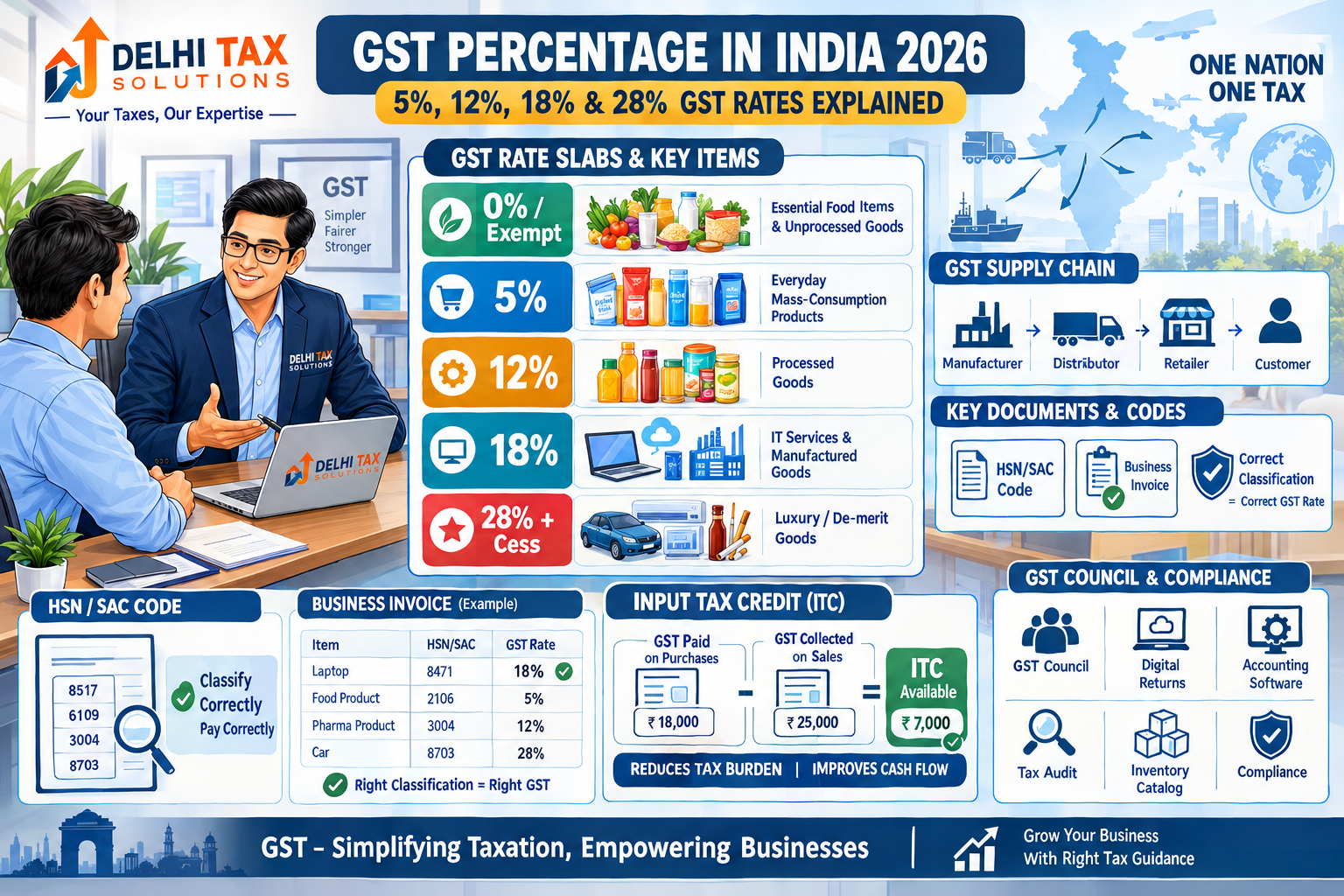
- India structures indirect taxes across four primary slab tiers: 5%, 12%, 18%, and 28%.
- Essential food items and unprocessed goods remain exempt or attract 0% tax.
- Standard services and manufactured goods mostly align with the 18% slab.
- Luxury goods and automobiles face a 28% levy plus additional compensatory cess.
- Accurate HSN code classification prevents costly tax audits and notices.
Pricing a product or billing a corporate client requires absolute precision. Charging the wrong tax percentage on an invoice creates immediate accounting chaos. Customers refuse to pay mismatched totals, and corporate buyers reject invoices that fail input tax credit validations. Understanding how the government organizes its taxation structure is vital for every modern entrepreneur.
The centralized indirect tax framework relies on a multi-tiered council that meets regularly to adjust levies. Navigating these tiers without a clear roadmap leads to misclassifications. Whether you sell packaged software or agricultural equipment, knowing your exact obligations safeguards your operating margins.
This guide breaks down the core structural tiers, examines what each gst percentage means for daily commerce, and highlights essential rules for 2026 compliance. Let us examine how the system operates in practice.
What Are the Current GST Rates in India?
Goods and Services Tax rates in India are categorized primarily into four major slabs: 5%, 12%, 18%, and 28%. In addition to these standard tiers, certain essential items attract a 0% tax rate or full exemption, while precious metals like gold carry a specialized 3% rate. The GST Council determines these classifications based on the utility and luxury status of commodities, ensuring that basic survival goods remain affordable while luxury items bear a heavier fiscal weight.
Decoding the 5%, 12%, 18%, and 28% Slabs
Every commercial item in India maps to a specific HSN (Harmonized System of Nomenclature) code that dictates its applicable tax tier. Understanding the 5% 12% 18% 28% structure allows businesses to calculate landed costs and set competitive retail prices accurately.
The lowest standard slab of 5% applies primarily to mass-consumption goods like packaged food items, edible oils, and economy transport services. Moving up, the 12% tier covers processed foods and specialized tools. The 18% tier represents the backbone of Indian commerce, absorbing the vast majority of manufactured goods and professional services.
The 28% Slab and Sin Goods
At the top of the standard structure sits the 28% tier. This bracket targets high-end consumer durables, automobiles, air conditioners, and cement. Furthermore, demerit goods like tobacco, carbonated beverages, and luxury vehicles attract an additional compensation cess on top of the 28% base, pushing the total tax burden significantly higher.
| Tax Slabs | Category Focus | Common Examples |
|---|---|---|
| 0% / Exempt | Essential Survival Goods | Fresh milk, vegetables, unbranded grains, salt |
| 5% Tier | Mass Consumption Items | Edible oil, sugar, tea, economy train tickets |
| 12% Tier | Processed Foods & Goods | Butter, cheese, packed dry fruits, mobile phones |
| 18% Tier | Standard Services & Manufacturing | IT services, restaurant dining, soap, capital goods |
| 28% Tier | Luxury & Demerit Goods | Automobiles, AC units, aerated drinks, tobacco |
How the GST Percentage Applies to Everyday Business
Applying the correct tax calculation on commercial invoices requires understanding value additions. When you purchase raw inputs, you pay tax to your vendor. When you sell the finished output, you collect tax from your customer. The difference between what you collected and what you paid forms your net tax liability.
According to updates published by the Press Information Bureau, automated return matching has reduced processing fraud, making accurate tax slab matching mandatory. If an enterprise applies an 18% rate to an item designated for the 12% bracket, customers experience immediate billing disputes and input tax credit mismatches on the official Official GST Portal.
The Importance of Proper Documentation
Maintaining clean financial records protects businesses during government audits. Founders should regularly review their accounting software configurations. Ensuring your items link to correct HSN codes prevents discrepancies when filing monthly returns. Businesses launching new ventures often streamline this setup through professional GST Registration services.
What Our CA Team Sees In Practice
Theoretical knowledge differs significantly from operational reality. Based on cases handled by our CA team, the single most frequent error made by emerging business owners involves misclassifying composite supplies. For example, a tech consultancy bundling software licenses with hardware maintenance often applies a flat rate without verifying if the principal supply demands a higher tax bracket.
Another common pitfall occurs when startups alter their product lines. They update their marketing but forget to update their billing software HSN codes. This triggers automated mismatch flags during annual reviews, leading to unnecessary scrutiny from tax authorities. We strongly advise clients utilizing our Start a Business advisory to conduct quarterly tax audits of their inventory catalogs.
Furthermore, founders must keep their corporate compliance aligned across all regulatory fronts. Managing indirect tax classifications smoothly goes hand in hand with maintaining accurate Income Tax Filing schedules and securing necessary Business Licenses for specialized operational sectors.
Exemptions and Special Rates for MSMEs
Micro, Small, and Medium Enterprises enjoy several protective provisions under the indirect tax framework. Certain artisanal products, handloom items, and localized services are completely exempt to foster traditional trade. Additionally, small-scale enterprises with modest turnovers can opt for composition schemes that permit lower tax payments with simplified quarterly compliance filings.
However, opting for simplified schemes restricts your ability to pass on tax credits to corporate clients. Evaluating whether your target market consists of retail consumers or B2B enterprises dictates your optimal registration strategy. Reviewing these choices with experienced advisors ensures your pricing model remains competitive without eroding profit margins.
Conclusion
Understanding the slab rates of India’s taxation system protects your operating margins and shields your business from surprise tax penalties. Accurately matching your product or service to its correct HSN/SAC code ensures seamless B2B transactions and trouble-free input tax credit claims.
Need help clearing up your tax classifications or filing your registrations? Talk to a Delhi Tax Solutions expert to get your compliance framework structured seamlessly today.
Frequently Asked Questions (FAQs)
Q: What are the standard GST rate slabs currently active in India?
A: India operates primarily across four major standard tax tiers: 5%, 12%, 18%, and 28%. In addition to these, essential survival goods remain exempt or taxed at 0%, while specific luxury and sin goods attract an extra compensatory cess. The GST Council periodically reviews and updates these brackets based on economic requirements.
Q: Which essential goods and food items fall under the 0% or exempt category?
A: To protect consumers from inflation on basic necessities, the government exempts unbranded food grains, fresh milk, vegetables, salt, and unprocessed cereals from taxation. These items carry a 0% tax rating, allowing households to purchase daily sustenance without facing cascading indirect tax burdens at retail counters.
Q: How is the correct gst percentage determined for a new product or service?
A: The correct tax percentage depends entirely on the Harmonized System of Nomenclature (HSN) code for goods or the Service Accounting Code (SAC) for services. Businesses must search the official tariff schedules provided by regulatory authorities to match their exact product specifications with the correct legislative tax tier before issuing invoices.
Q: What luxury and demerit items attract the highest 28% tax slab plus cess?
A: The maximum 28% tax slab applies to high-end consumer durables, automobiles, air conditioning units, and cement. Furthermore, demerit or sin goods such as tobacco products, aerated beverages, and luxury automobiles attract an additional compensatory cess legislated by the central government to curb excessive consumption.
Q: Where can businesses verify official HSN codes and matching tax rates?
A: Businesses can verify official HSN codes, SAC codes, and corresponding tax rates directly through the official GST portal search utility. Maintaining precise alignment with these verified government directories prevents filing mismatches and ensures full compliance during routine tax audits and corporate evaluations.
This article is for general informational purposes and is not a substitute for personalised professional tax advice. About this article: Researched using official government sources, real-time competitor and search-trend analysis, and Delhi Tax Solutions’ in-house tax advisory team. Last updated September 2026.
