
💡 Key Takeaways
- The Faceless Appeal Scheme replaces traditional physical appellate hearings with an automated, electronic dispute resolution mechanism.
- Operations are centralized through the National Faceless Appeal Centre (NFAC) and Regional Faceless Appeal Centres (RFACs).
- All submissions, notices, and draft appellate orders are exchanged digitally via the Income Tax e-filing portal.
- Taxpayers can request a personal hearing via video conferencing under specific circumstances.
- Proper legal framing of appeals is essential when contesting disputed assessment demands arising from Income Tax Filing audits.
Receiving an unfavorable assessment order or an inflated tax demand can be stressful for any taxpayer or business owner. Fortunately, the Indian tax administration has modernized the dispute resolution framework to make it more transparent, efficient, and free from physical bottlenecks. Through the Faceless Appeal Scheme, appeals against orders passed by Assessing Officers (AOs) are conducted entirely online. Mastering the faceless appeal scheme income tax process is vital for anyone looking to challenge arbitrary tax additions, penalty orders, or disputed demands. Whether you are managing individual investments or overseeing corporate Company Registration compliance, understanding this digital appellate framework ensures your rights are fully protected.
What Is the Faceless Appeal Scheme?
The Shift from Physical Courts to Digital Dispute Resolution
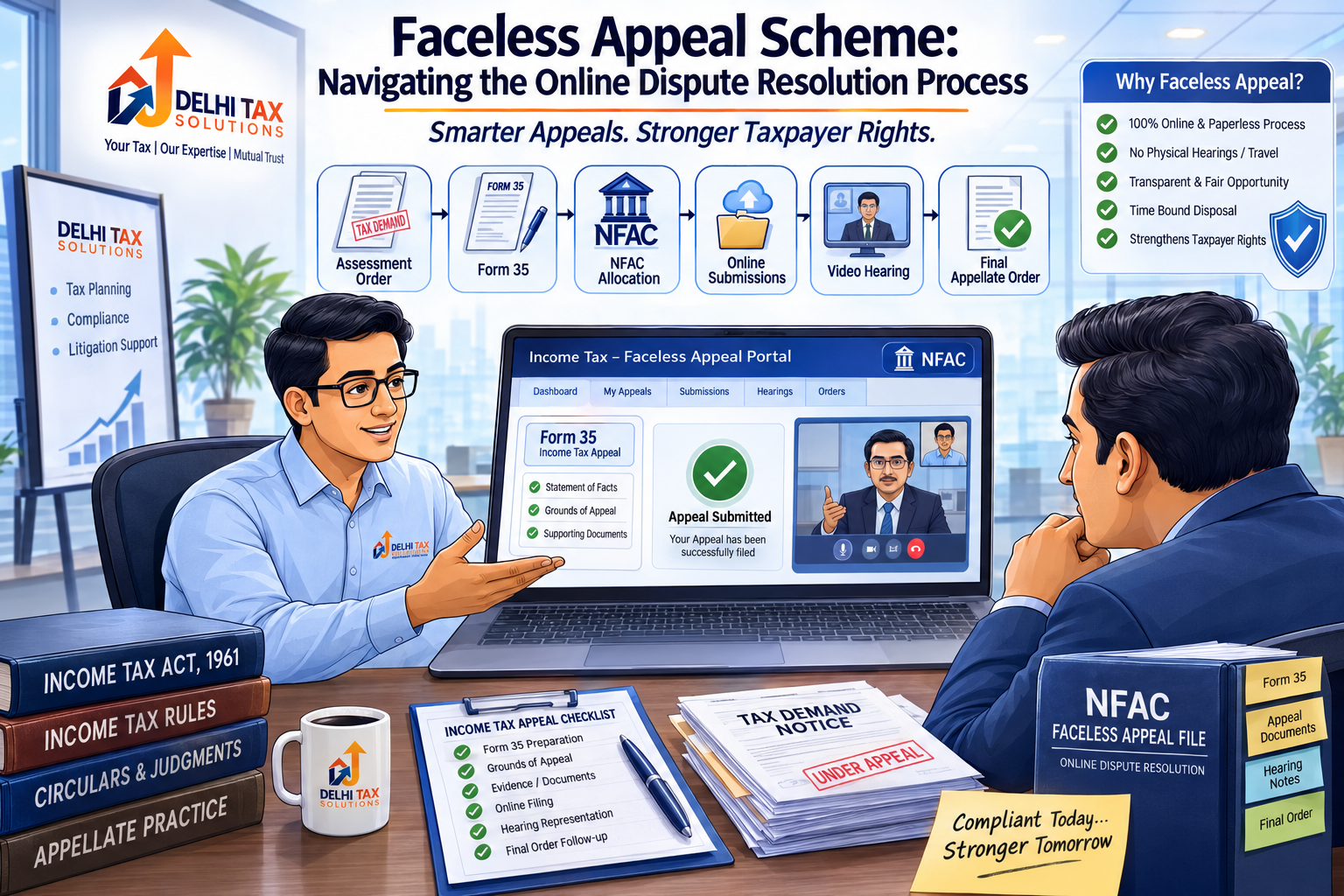
Historically, contesting an assessment order required physical appearances before the Commissioner of Appeals (CIT Appeals), often involving protracted legal delays and local logistical hurdles. The Faceless Appeal Scheme eliminates physical touchpoints. Under this framework, communications, evidence submissions, and hearings are conducted digitally. The entire process is managed by the National Faceless Appeal Centre (NFAC), which allocates appeal cases randomly to automated appeal units across the country, ensuring complete anonymity and impartiality.
Faceless Assessment vs. Faceless Appeal
While a Faceless Assessment deals with the initial scrutiny of your tax return and the gathering of explanations by an assessing officer, a Faceless Appeal comes into play *after* an assessment or penalty order has already been passed against you. If you disagree with the AO’s additions or tax computations, the appeal mechanism provides a higher-tier quasi-judicial review. Corporate entities managing complex TDS Compliance disputes or commercial property litigation must navigate both stages seamlessly.
Step-by-Step Procedure to File an Appeal Online
Step 1: Filing Form 35 on the Portal
To initiate a dispute resolution, you must file an appeal electronically using Form 35 on the official Income Tax Department e-filing portal. The appeal must generally be filed within 30 days of receiving the disputed assessment order. You must attach the impugned assessment order, the notice of demand, a detailed statement of facts, and specific grounds of appeal.
Step 2: Allocation by NFAC and Review
Once Form 35 is successfully submitted, the National Faceless Appeal Centre (NFAC) acknowledges the filing and assigns the case randomly to a specific Appeal Unit via an automated allocation system. The Appeal Unit reviews the statement of facts, examines the original assessment records, and prepares a draft order or issues further notices asking for clarifications.
⚡ Key Action
Always ensure your grounds of appeal are drafted with precision, as the appellate authority evaluates your arguments strictly against the points raised in Form 35.
Video Conferencing and Personal Hearings
Is Physical Presence Allowed?
Under the pure digital model, personal physical hearings are abolished. However, the scheme recognizes that complex legal matters may require verbal submissions. Taxpayers can request a personal hearing through video conferencing. This request is evaluated by the Chief Commissioner or Director General in charge of the Regional Faceless Appeal Centre (RFAC). If approved, a secure video link is shared with the appellant and their authorized representative.
Submitting Additional Evidence
If you need to submit additional evidence that was not presented during the initial assessment stage, Rule 46A applies. You must formally request admission of additional evidence, explaining why it could not be produced earlier. Reviewing property documentation, capital gains records, and local Property Tax receipts before submission prevents evidentiary gaps.
| Stage of Appeal | Process & Digital Action |
|---|---|
| Filing Appeal | Submit Form 35 online within 30 days with grounds of appeal and statement of facts. |
| Central Allocation | NFAC assigns the case to an automated Appeal Unit and notifies the taxpayer. |
| Submissions & Notices | Taxpayer uploads written replies, rebuttals, and documents via the e-filing portal. |
| Video Hearing | Optional personal hearing conducted via secure video conferencing upon approval. |
| Final Appellate Order | NFAC finalizes and serves the digital order (upholding, modifying, or annulling the demand). |
Benefits, Challenges, and Professional Support
Transparency and Accountability
The primary advantage of the Faceless Appeal Scheme is transparency. Because cases are assigned randomly across different cities without the identity of the assessing officers or appellate commissioners being known, local bias is minimized. Official releases by the Press Information Bureau highlight the government’s ongoing commitment to a transparent, taxpayer-friendly digital ecosystem. Furthermore, businesses managing multi-state operations and GST Registration compliance benefit from unified digital tracking.
Expert CA Advisory
Despite its efficiency, drafting legal grounds of appeal, framing statutory arguments, and managing digital submissions require deep technical expertise. A poorly drafted appeal can lead to confirmation of unwarranted tax demands by apex financial regulators like the Reserve Bank of India and the Ministry of Corporate Affairs. If you are contesting a heavy tax demand or an unfair assessment order, professional guidance is essential. Talk to a Delhi Tax Solutions expert today. Our certified Chartered Accountants and tax lawyers will draft robust grounds of appeal, manage your NFAC portal submissions, and represent your case effectively.
Facing a disputed tax demand is challenging, but the digital appellate mechanism provides a fair, structured path to justice. Understanding the faceless appeal scheme income tax process empowers you to challenge arbitrary additions with confidence. Connect with Delhi Tax Solutions to secure expert professional representation and safeguard your financial interests.
About this article: Researched using official government sources and Delhi Tax Solutions’ in-house tax advisory team. Last updated August 2026.
Frequently Asked Questions (FAQs)
Q: What is the Faceless Appeal Scheme under the Income Tax Act?
A: The Faceless Appeal Scheme is an electronic dispute resolution system where appeals against income tax assessment orders are filed, processed, and adjudicated online without physical meetings between the taxpayer and the appellate authority.
Q: How does the National Faceless Appeal Centre (NFAC) function?
A: The NFAC serves as the centralized digital hub that receives online appeals, automatically allocates cases to random Appeal Units across the country, manages communication exchanges, and issues final appellate orders.
Q: How can I file an income tax appeal online on the e-filing portal?
A: To file an appeal online, log into the Income Tax e-filing portal, navigate to e-File > Income Tax Forms > File Income Tax Forms, and select Form 35, attaching the disputed order, statement of facts, and grounds of appeal.
Q: What is the difference between Faceless Assessment and Faceless Appeal?
A: Faceless Assessment refers to the initial scrutiny and audit of a filed tax return by tax authorities. Faceless Appeal is the subsequent dispute resolution process initiated when a taxpayer contests an unfavorable assessment or penalty order.
Q: Can I request a personal hearing via video conferencing during a faceless appeal?
A: Yes. While hearings are conducted digitally, you can formally request a personal hearing through video conferencing. If approved by the Regional Faceless Appeal Centre, a secure video link is provided for oral submissions.
