
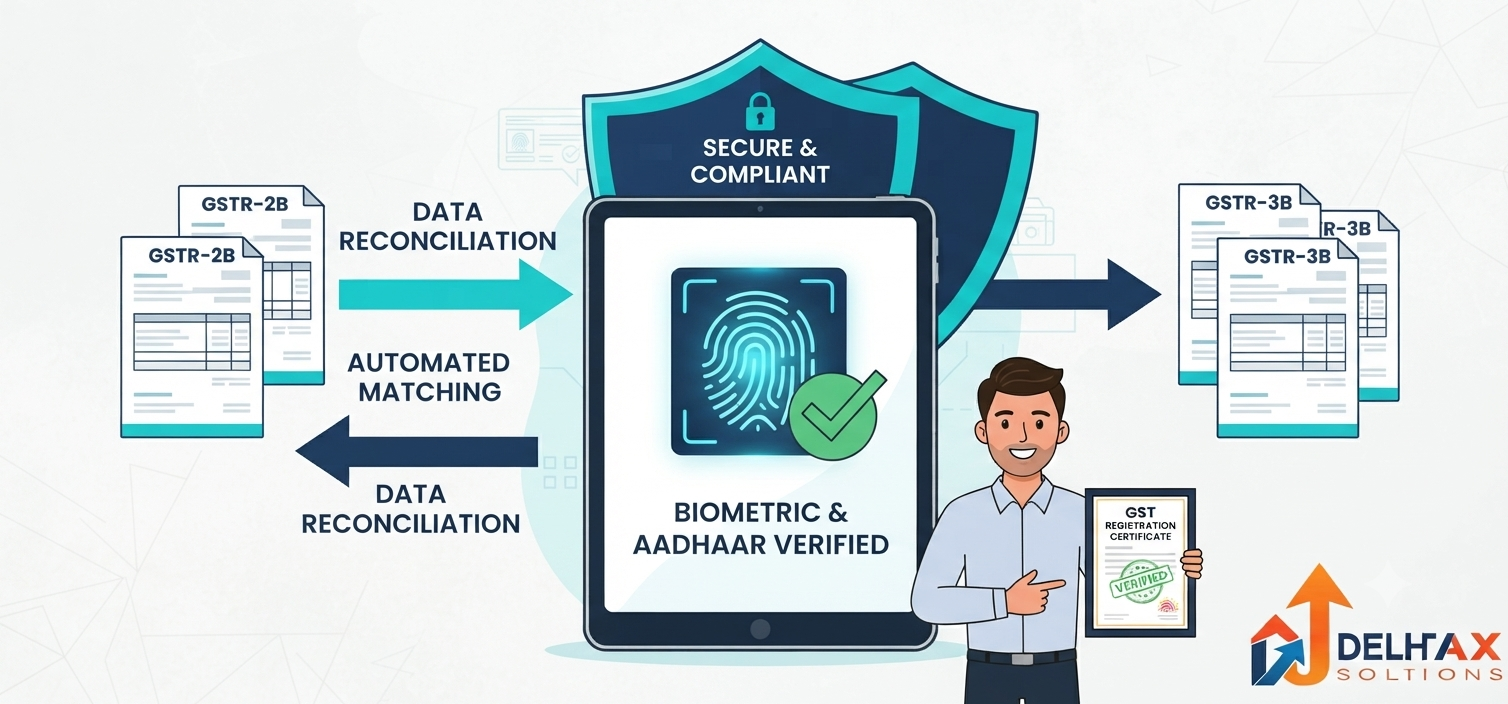
💡 Key Takeaways
- Mandatory nationwide rollout of biometric-based Aadhaar authentication for high-risk GST registration applicants.
- Automated Input Tax Credit (ITC) process reforms designed to eliminate manual interventions and mismatch notices.
- Strict risk-based profiling algorithms deployed to detect fake invoicing networks at the registration stage.
- Simplified invoice reconciliation workflows between GSTR-1, GSTR-2B, and GSTR-3B filings.
- Targeted rate rationalization and procedural relaxations for small businesses and MSMEs across India.
The 57th GST Council Meeting has introduced transformative structural adjustments aimed at tightening compliance while easing the administrative burden on honest taxpayers. Led by Union Finance Minister Nirmala Sitharaman and representatives from all States and Union Territories, this session focused heavily on two critical pillars of the Goods and Services Tax framework: trade facilitation through streamlined registration processes and system integrity through advanced Input Tax Credit (ITC) fraud prevention.
Over the past few fiscal years, tax authorities faced significant challenges from fraudulent entities establishing shell firms to pass illegal tax credits. In response, the GST Council recommended a dual strategy. On one end, it strengthens risk-based digital gatekeeping using biometric verification. On the other end, it automates ITC claims to prevent unnecessary litigation for legitimate businesses. For business owners navigating these updates, professional guidance through GST Registration & Filing services ensures complete operational compliance without unexpected notice hassles.
This comprehensive guide breaks down the core recommendations of the 57th GST Council Meeting, covering registration overhauls, ITC process enhancements, anti-fraud measures, and a practical action checklist for your business.
What Are the Key Decisions of the 57th GST Council Meeting?
The 57th GST Council Meeting recommended nationwide implementation of biometric-based Aadhaar authentication for new GST applicants identified as high-risk, automated reconciliation mechanisms for Input Tax Credit (ITC) claims between GSTR-2B and GSTR-3B, and stricter system-driven checks to eliminate fake invoicing networks. These measures streamline registration for genuine taxpayers while enforcing automated digital checks against fraudulent credit pass-throughs.
These reform measures mark a decisive shift toward data-driven governance. By embedding automated risk analysis directly into the GST Portal, tax officers can identify irregularities automatically. Official circulars and detailed press releases can be monitored via the CBIC Portal and official regulatory updates from the Press Information Bureau.
Biometric GST Registration & Mandatory Aadhaar Verification Reforms
To curb the menace of dummy registrations created using stolen identity credentials, the GST Council expanded the pilot project of biometric-based Aadhaar authentication across all Indian States and Union Territories. Previously, registration relied heavily on OTP-based Aadhaar verification, which unscrupulous actors exploited by using stolen PAN and Aadhaar details of unsuspecting individuals.
Under the enhanced framework, the GST portal evaluates applicants using automated risk parameters, analyzing factors like business location, applicant history, and financial profiles. Applicants flagged as high-risk must undergo physical biometric verification at designated Suvidha Kendras.
Step-by-Step Biometric Registration Workflow
- Application Submission (REG-01): The applicant submits Part A and Part B of Form GST REG-01 on the Official GST Portal.
- Risk Profiling: System algorithms automatically evaluate applicant profile data. Standard applicants receive OTP-based verification links, whereas high-risk applicants receive an appointment link for biometric verification.
- VFC Appointment: High-risk applicants schedule an appointment at a nearby GST Seva Kendra or Facilitation Centre.
- In-Person Verification: The applicant presents original identity documents (PAN, Aadhaar, proof of business address) and provides biometric scans (fingerprint and iris match).
This physical verification barrier drastically reduces dummy registrations. Honest entrepreneurs who complete standard authentication receive their registration certificates faster. If you are starting a new business, integrating your incorporation with professional GST Registration Process guidelines prevents unnecessary registration delays.
Input Tax Credit (ITC) Process Reforms & Rule 36(4) Reconciliations
Input Tax Credit remains the backbone of the GST structure. Misalignments between buyer and supplier filings have historically caused audit notices and blocked working capital. The 57th GST Council Meeting addressed these pain points by recommending tighter integration between GSTR-1/IFF and GSTR-2B statement generation.
The Council emphasized that auto-populated GSTR-2B statements must serve as the primary legal baseline for claiming credit under GSTR-3B. To protect buyers from supplier defaults, new system checks restrict suppliers from filing GSTR-1 if their prior period GSTR-3B return remains unfiled. This ensures that tax liabilities declared by suppliers match tax collected and remitted to the government treasury.
⚡ Quick Summary
Under post-57th Council standards, ITC claims exceeding GSTR-2B auto-populated limits beyond permissible tolerances trigger automated demand notices. Always perform monthly purchase register reconciliations before filing GSTR-3B returns.
Comparison Framework: Pre-57th vs. Post-57th GST Council Rules
Understanding how the compliance landscape has evolved helps businesses adapt their internal accounting workflows. The table below outlines key structural shifts introduced across registration, credit matching, and audit procedures:
| Compliance Pillar | Pre-57th GST Council Framework | Post-57th GST Council Framework |
|---|---|---|
| Applicant Verification | Remote OTP-based Aadhaar validation for most applications. | Risk-driven mandatory biometric verification at Facilitation Centres. |
| ITC Reconciliation | Manual matching with supplier invoices; flexible provisional credit. | Strict GSTR-2B lock-in with system-driven discrepancy alerts. |
| Defaulting Supplier Controls | Delayed notices sent manually after audit period reviews. | Automated GSTR-1 filing blocks for non-filers of GSTR-3B. |
| Fraud Mitigation | Post-facto physical site visits by tax officers. | Pre-registration AI data profiling and identity matching. |
By shifting from manual post-audit checks to automated real-time verification, the tax ecosystem protects compliant entities while curbing revenue leakage. Business leaders should coordinate with professional consultants who handle both direct and indirect taxation, including Income Tax Return Filing and corporate setup, to maintain holistic compliance records.
Rate Rationalization & Measures to Curb Fake Invoicing
A central objective of the GST Council’s ongoing agenda is the correction of inverted duty structures and classification disputes across key commercial sectors. The 57th meeting reinforced measures targeting circular trading networks, where fraudulent invoices are passed across multiple entities without actual movement of goods.
Key anti-fraud mechanisms reinforced by the Council include:
- E-Way Bill Integration: Real-time cross-referencing between E-Way bill generation data, FASTag toll tracking, and GSTR-1 supply declarations to ensure physical delivery of goods accompanies tax invoice creation.
- Sequential Filing Locks: Restricting taxpayers from skipping return filing periods. Taxpayers must clear GSTR-1 and GSTR-3B liabilities sequentially to prevent artificial credit accumulation.
- E-Invoicing Threshold Extensions: Moving toward universal mandatory e-invoicing for B2B transactions across lower turnover tiers, ensuring every commercial invoice is indexed on the Invoice Registration Portal (IRP) in real time.
Entities forming new commercial structures must build clean accounting systems from day one. Proper entity formation, whether choosing a Private Limited Company or LLP structure via Company Registration services, sets a solid compliance baseline.
Practical Action Plan for Small Businesses & MSMEs
Navigating these regulatory adjustments requires proactive internal controls. Our CA advisory team recommends that small business owners and finance teams execute the following action plan immediately:
- Verify Vendor Compliance Scores: Regularly check your suppliers’ return filing status on the GST portal. Cease business credit terms with suppliers who routinely delay GSTR-1 or GSTR-3B filings.
- Conduct Biometric Readiness Checks: Ensure that primary authorized signatories have updated Aadhaar contact details and linked mobile numbers ready if biometric appointment notices are issued.
- Automate Monthly Reconciliations: Utilize ERP and accounting software that performs automated matching between purchase ledgers and GSTR-2B statements prior to GSTR-3B submission.
- Maintain Physical Business Proofs: Ensure principal place of business premises display clear signage with GSTIN numbers, updated rental agreements, and recent electricity utility bills to pass physical verification checks smoothly.
What Delhi Tax Solutions Experts Recommend
The recommendations of the 57th GST Council reflect a mature digital tax administration. While stricter biometric controls and automated ITC locks increase initial vigilance requirements, they create a fairer marketplace by removing unfair competition from tax-evading entities.
At Delhi Tax Solutions, our experienced team of Chartered Accountants and tax consultants helps businesses adapt seamlessly to regulatory updates. From hassle-free GST registration to monthly return filing and notice management, we handle your indirect tax compliance so you can focus on scaling your enterprise.
Conclusion
The 57th GST Council Meeting marks a decisive milestone toward secure and transparent tax administration. By upgrading biometric verification standards and automating ITC reconciliation, the government is safeguarding honest taxpayers while weeding out shell companies. Stay ahead of these changes by tightening your vendor audits and accounting workflows today.
About this article: Researched using official government sources (CBIC Press Release, GST Council Recommendations, and PIB updates), real-time search trends, and Delhi Tax Solutions’ in-house tax advisory team. Last updated October 2026.
Disclaimer: This article is for general informational purposes and is not a substitute for personalised professional tax advice.
Frequently Asked Questions (FAQs)
+ Q: What are the key decisions taken in the 57th GST Council Meeting regarding GST registration?
A: The 57th GST Council Meeting recommended a nationwide rollout of biometric-based Aadhaar authentication for high-risk GST registration applicants. It also introduced automated risk-profiling mechanisms on the GST portal to verify applicant credentials, reducing dummy firm creations while speeding up registration approvals for genuine business owners.
+ Q: How does biometric Aadhaar authentication work for new GST registration?
A: Upon submitting Form GST REG-01, system algorithms analyze the applicant’s risk profile. If flagged as high-risk, the applicant receives a link to schedule an appointment at a designated GST Suvidha Kendra. At the center, the applicant presents original identity documents and provides fingerprint and iris biometrics to complete verification.
+ Q: What changes have been made to the Input Tax Credit (ITC) claim process?
A: The Council reinforced mandatory reconciliation between GSTR-2B auto-populated statements and GSTR-3B filings. It also implemented sequential filing rules and system blocks that prevent suppliers from filing GSTR-1 if their previous GSTR-3B returns are unfiled, protecting buyers from purchasing from defaulting sellers.
+ Q: How is the GST Council curbing fake invoicing and fraudulent ITC claims?
A: Anti-fraud measures include integrating E-Way bill movement data with FASTag tracking, sequential return filing locks, mandatory e-invoicing threshold expansions, and AI-driven risk profiling at both registration and return submission stages to detect circular trading networks automatically.
+ Q: What steps should MSMEs take to stay compliant under the post-57th GST Council framework?
A: MSMEs should perform monthly automated reconciliations between their purchase registers and GSTR-2B, monitor vendor filing statuses regularly, maintain updated physical business premise proofs, and ensure authorized signatories have active credentials for seamless verification.